

CRW009 - Investigative Questioning Workshop for MOE Schools (2 Days Workshop)
Schedules:
Upcoming – Dates Coming Soon
Venue:
Confirmation depends on Class size & availability
Note:
Includes Buffet lunch, 2 Tea Breaks (Coffee/Tea & Pastries)
Limited Complimentary Car Parking Coupons are available upon request
Course Fees
- Individual Participation
SGD 1,150
- FULL 2 days Programme
- Course Material
- Certificate of Completion
- Group Rate (3+ Participation)
SGD 1,050 per person
- Venue Hotel or clubhouse
- 2 Tea break & lunch provided
- Cost-effective learning
IN-House Fees
- Minimum (15+ Participation)
SGD 700 per person
- Client need to provide classroom
- No food will be provided
- Cost-effective learning
Course Synopsis
Educational institutions are responsible not only for academic development but also for maintaining a safe, respectful, and disciplined learning environment. Schools frequently encounter situations that require careful inquiry, such as student misconduct, bullying incidents, disciplinary violations, theft, harassment complaints, academic dishonesty, and conflicts between students or staff. In such cases, school leaders, discipline masters, counsellors, and teachers must conduct inquiries that are fair, objective, and sensitive to the welfare of students. The success of these inquiries largely depends on the ability to ask appropriate questions and gather accurate information from those involved.
The Investigative Questioning Workshop for MOE Schools (CRW009) is designed to equip educators and school administrators with the essential skills required to conduct structured and ethical investigative questioning. The course focuses on how school personnel can use effective questioning techniques to understand incidents, clarify facts, and resolve disciplinary matters in a professional and constructive manner. In school environments, investigations must be conducted with care, as students may feel anxious, confused, or reluctant when being questioned. Therefore, it is important for educators to apply questioning techniques that are fair, supportive, and non-intimidating.
This workshop introduces participants to the principles and structured methods of investigative questioning appropriate for educational settings. Participants will learn how to prepare for an inquiry, organise interviews with students and staff, and structure questions in a logical sequence that allows them to understand what happened, who was involved, and what actions are necessary. The programme emphasizes that effective questioning helps educators obtain reliable information while maintaining respect for the rights and wellbeing of students.
Participants will explore different types of questioning techniques including open questions, probing questions, clarifying questions, reflective questions, and summarizing questions. These questioning strategies encourage students to express their experiences and provide detailed explanations of incidents. At the same time, participants will learn to avoid inappropriate questioning methods such as leading questions, accusatory language, or assumptions that may influence student responses or create fear during interviews.
School investigations often involve young individuals who may feel nervous or uncertain about sharing information. Therefore, the course highlights the importance of empathetic communication, attentive listening, and maintaining a supportive environment during questioning. Participants will learn how tone of voice, body language, and patience can significantly influence the willingness of students to provide truthful information.
The workshop includes practical examples based on common school situations such as bullying incidents, classroom misconduct, disciplinary cases, disputes between students, and violations of school policies. These examples demonstrate how structured questioning helps educators gather facts objectively and make informed decisions that protect both student welfare and school discipline.
By the end of the workshop, participants will gain a practical framework for conducting investigative questioning within the school environment. They will understand how disciplined questioning improves the accuracy of incident reports, supports fair disciplinary decisions, and ensures that investigations are conducted in a respectful and professional manner.
The Investigative Questioning Workshop for MOE Schools ultimately aims to strengthen the capacity of educators to manage disciplinary and welfare-related issues effectively. By developing structured questioning skills, school leaders and teachers can ensure that incidents are handled responsibly, students are treated fairly, and school environments remain safe and supportive for learning.
Learning Objective
By the end of this workshop, participants will be able to:
- Explain the importance of investigative questioning in school environments, particularly in handling disciplinary incidents and student welfare matters.
- Identify common school investigation scenarios, including bullying, misconduct, theft, classroom disruptions, academic dishonesty, and policy violations.
- Apply structured investigative questioning techniques to gather accurate information from students, staff, and witnesses during school inquiries.
- Differentiate between effective question types, including open, probing, clarifying, reflective, and summarizing questions.
- Avoid inappropriate questioning practices, such as leading, accusatory, or intimidating questions that may influence student responses.
- Develop systematic lines of questioning that help establish facts and understand the sequence of events in school incidents.
- Conduct interviews with students in a supportive and respectful manner that encourages truthful communication.
- Manage sensitive situations involving students, ensuring fairness, patience, and emotional awareness during questioning.
- Apply active listening skills to better understand student perspectives and obtain accurate information.
- Maintain professional control during interviews through calm communication, neutral language, and structured questioning.
- Document investigation findings clearly and accurately to support disciplinary reviews and school administrative decisions.
- Promote fairness and accountability in school disciplinary processes through structured and responsible investigative questioning practices.
Learning Outline
Upon completion of the workshop, participants will be able to:
- Conduct investigative questioning during school disciplinary inquiries.
- Apply questioning techniques when investigating student misconduct.
- Use open-ended questions to encourage students to share information.
- Apply probing questions to understand incidents more clearly.
- Clarify facts and timelines during school investigations.
- Maintain respectful and supportive communication with students.
- Apply active listening when interviewing students and staff.
- Handle sensitive student situations with patience and professionalism.
- Avoid leading or intimidating questions when questioning students.
- Identify inconsistencies in student accounts of incidents.
- Structure investigative questioning to establish accurate facts.
- Maintain calm and controlled interviews with students.
- Record investigation findings clearly for school disciplinary records.
- Support fair and balanced disciplinary decision-making.
- Promote accountability and a safe learning environment.
Key Benefits of the Course
- Improves educators’ ability to conduct fair and structured disciplinary inquiries.
- Enhancing communication between teachers, students, and school administrators.
- Strengthens the accuracy of information obtained during school investigations.
- Help educators manage sensitive conversations with students effectively.
- Encourages respectful and supportive investigative questioning practices.
- Reduces misunderstandings during student disciplinary investigations.
- Improves the ability to identify inconsistencies in student statements.
- Enhances documentation of school incident reports.
- Supports fair and balanced disciplinary decision-making.
- Promotes accountability among students and staff.
- Strengthens school leadership in handling disciplinary issues.
- Improves professionalism in managing student welfare cases.
- Encourages safe and transparent school environments.
- Enhances confidence of educators when conducting investigative interviews.
- Contributes to a more disciplined and respectful school culture.
Who Should Attend
- School principals
- Vice principals
- Discipline master’s and discipline teachers
- Student welfare officers
- School counsellors
- Teachers responsible for student discipline
- Year heads and form teachers
- School operations managers
- School administrative managers
- School safety and security coordinators
- MOE disciplinary investigation officers
- Student management committee members
- Teachers involved in student welfare investigations
- School compliance or policy officers
- Education administrators responsible for disciplinary cases
Professional classroom training built for capability, confidence, and impact.
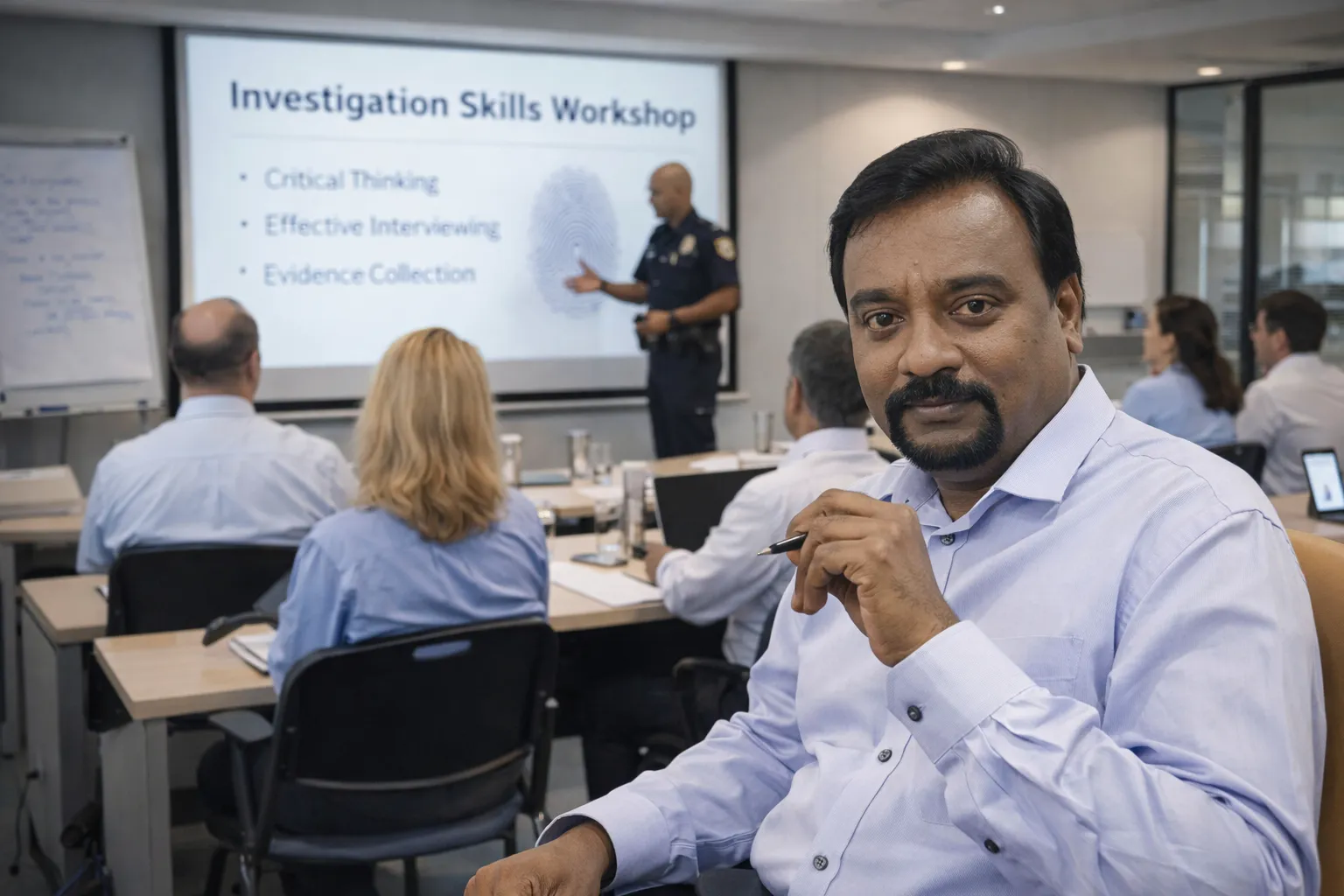
Our instructor-led classroom training combines deep subject-matter expertise with proven instructional methodologies. Participants engage in structured learning, guided discussions, and scenario-based activities that build confidence, competence, and professional judgment.
Methodology
This will be a 1-day course, delivered through an interactive and structured approach that blends theory with practice. The methodology ensures that participants not only understand the 5 Steps Interview model but also apply the skills through hands-on exercises. The following methods will be used:
- Presentation
- Videos
- Case studies
- Demonstrations (Demo)
- Role-Play
- Practice

Hear From Others
Trusted by Government and Corporate Organisations

"This workshop provided valuable insights on how educators can conduct disciplinary inquiries with students in a fair and respectful manner. The questioning techniques are practical and highly suitable for school environments."
Ms. Tan Hui Min
Vice Principal, MOE Secondary School
"The training helped our teachers develop better questioning skills when handling student incidents. The structured approach introduced during the course has improved the way we gather information and manage disciplinary cases in school."
Mr. David Ong
Head of Student Discipline, MOE School (Independent)

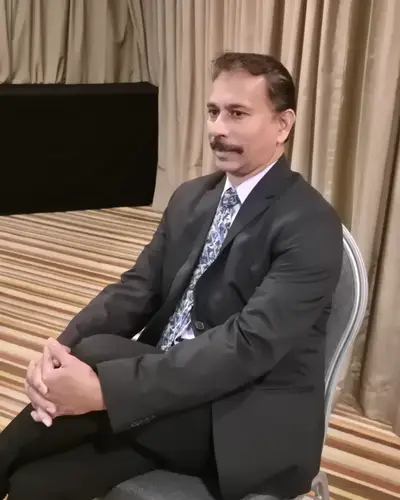
Alan Elangovan
Alan Elangovan is a highly respected Master Trainer and Behavioural Expert with over 30 years of professional experience across the civil service, defence, and corporate sectors. He served 20 years with the Ministry of Home Affairs (MHA) and 7 years with the Singapore Armed Forces (SAF), delivering high-impact training in criminal behaviour analysis, investigation techniques, and security interviewing. He is the Founder and Lead Trainer of LPS Training Services, which was rebranded as LPS Academy in 2025. Through this platform, he has trained more than 125,000 officers from public and private sector organisations, both locally and internationally. Alan is also an accomplished author of five books, a curriculum designer, and an international speaker, widely recognised for translating complex behavioural and investigative concepts into practical, field-ready competencies that enhance professional capability, investigative effectiveness, and organisational performance.
Pannirselvam
Pannirselvam is a highly experienced Operational Trainer with 30 years of distinguished military service and 10 years of professional training experience at LPS Training Services, which is now known as LPS Academy. Throughout his career, he has trained more than 50,000 officers across a wide range of security, operational, and enforcement disciplines. Having conducted operational training assignments across nine countries, he brings extensive field expertise, disciplined instruction, and international operational perspectives to every programme he delivers. His training emphasizes practical application, operational readiness, and real-world scenario learning, ensuring participants gain hands-on competencies and mission-focused skills essential for effective performance in demanding security and enforcement environments.