



Building Stronger Personal Effectiveness
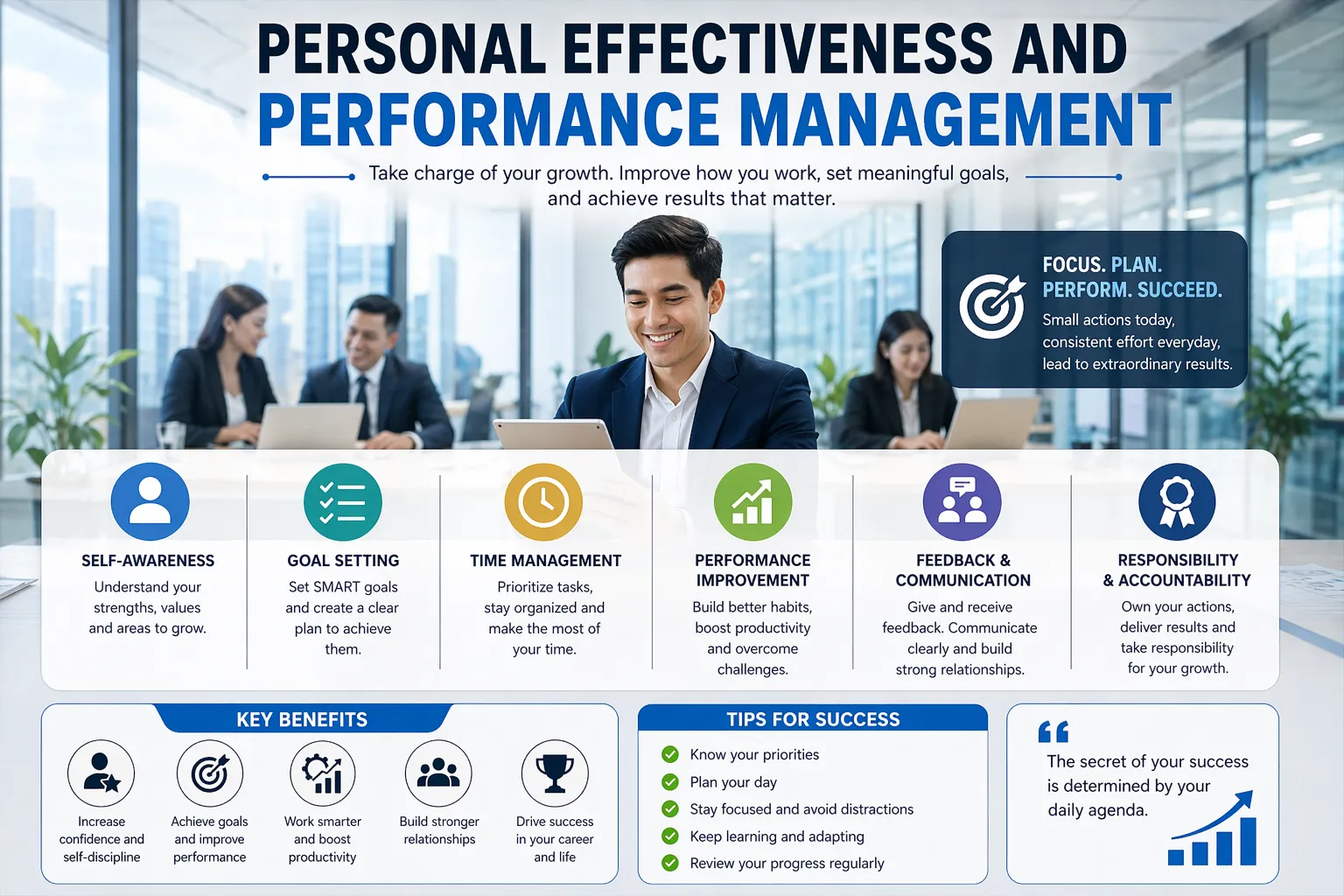
Personal Effectiveness and Performance Management help individuals improve focus, responsibility, confidence, and workplace results. In every organisation, employees need to manage tasks, meet expectations, communicate clearly, and contribute to team goals. Therefore, they must understand how their habits, attitude, discipline, and work behaviour affect performance. Personal effectiveness supports better self-management, clearer priorities, and stronger professional conduct. As a result, learners can take greater ownership of their work and perform with purpose.
Understanding Performance Expectations
Performance management begins with knowing what success looks like. Employees need clear goals, work standards, timelines, and feedback. In addition, they must understand how their role supports wider organisational outcomes. When expectations are clear, people can plan their work more effectively. Moreover, they can measure progress and correct mistakes early. Guidance from CIPD highlights the importance of goals, feedback, and continuous performance conversations. Therefore, learners can use these ideas to improve accountability and workplace contribution.
Improving Productivity and Work Quality
Strong personal effectiveness helps employees use time, energy, and resources wisely. However, performance can decline when people lack focus, avoid responsibility, or work without clear priorities. Learners will explore how planning, self-discipline, communication, and follow-through improve work quality. Furthermore, they will learn how to manage distractions, organise tasks, and complete responsibilities more consistently. As a result, they can reduce stress and increase productivity.
Using Feedback for Growth
Feedback plays an important role in performance improvement. It helps employees understand strengths, gaps, and areas for development. However, feedback only creates value when individuals reflect on it and take action. Therefore, learners need to respond to feedback with openness, maturity, and a willingness to improve. Resources from Harvard Business Review also emphasise the value of workplace performance, leadership, feedback, and professional growth. Consequently, learners can build stronger confidence and long-term career readiness.
Supporting Accountability and Continuous Improvement
Performance management is not only a manager’s responsibility. Employees must also take ownership of their behaviour, results, and development. In addition, they need to monitor progress, solve problems, and ask for support when needed. This approach builds trust and reliability. Moreover, it encourages continuous improvement. When individuals manage themselves well, they contribute more effectively to team success and organisational performance.
Course Focus and Learning Value
This course helps learners strengthen goal setting, work planning, self-discipline, accountability, feedback response, productivity, and performance improvement. Learners will explore practical ways to manage expectations, improve work habits, track progress, and support better outcomes. Ultimately, this course prepares learners to perform with confidence, take ownership of results, and contribute positively to workplace success.

Reviews
There are no reviews yet.