



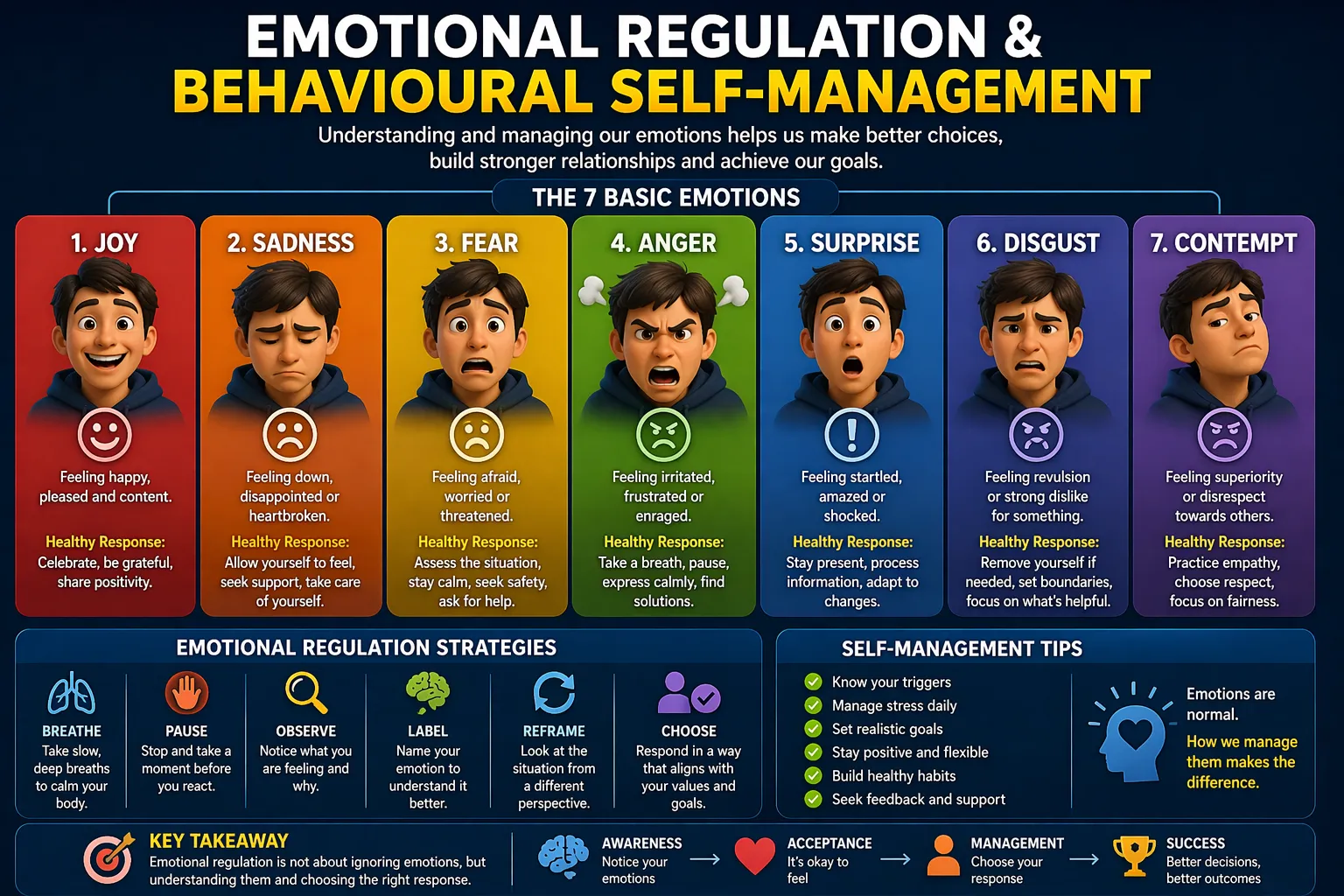
Building Emotional Control at Work
Emotional Regulation and Behavioural Self-Management are essential skills for maintaining professionalism, confidence, and positive workplace behaviour. In every workplace, employees face pressure, disagreement, feedback, deadlines, change, and unexpected challenges. Therefore, they need the ability to understand their emotions and manage their responses. Emotional regulation helps individuals recognise feelings before those feelings control their behaviour. As a result, employees can respond with greater calmness, maturity, and self-control.
Understanding Emotional Triggers
Emotional reactions often begin with triggers. These triggers may include criticism, conflict, workload pressure, unclear instructions, disrespectful communication, or personal stress. However, people may not always notice these triggers immediately. Therefore, learners need to identify situations that affect their mood, thinking, and behaviour. In addition, they must understand how emotions influence tone, body language, decision-making, and workplace relationships. Guidance from the American Psychological Association highlights how emotions affect behaviour, thinking, and well-being.
Managing Behaviour Professionally
Behavioural self-management means choosing actions carefully, even during difficult situations. It requires self-awareness, discipline, reflection, and responsibility. For example, an employee may feel angry, but still choose to speak respectfully. Similarly, a person may feel stressed, but still prioritise tasks and communicate clearly. Therefore, self-management helps individuals avoid impulsive reactions. Moreover, it supports better teamwork, trust, and workplace reliability.
Improving Communication Under Pressure
Strong emotional regulation improves communication. When individuals manage emotions well, they listen better, speak more clearly, and reduce unnecessary conflict. Furthermore, they can handle feedback, disagreement, and stressful conversations with greater confidence. The Harvard Business Review offers useful insights on emotional intelligence, leadership behaviour, and workplace communication. These ideas show why emotional control is important for professional success.
Supporting Workplace Relationships
Positive workplace relationships depend on respectful behaviour and emotional maturity. Employees who manage themselves well are more likely to show patience, empathy, and cooperation. In addition, they can repair misunderstandings and respond constructively to challenges. Consequently, teams become more respectful, stable, and productive. This also helps create a healthier workplace culture.
Course Focus and Learning Value
This course helps learners strengthen emotional awareness, self-control, behavioural discipline, stress response, communication, and workplace responsibility. Learners will explore how emotions affect actions, decisions, and relationships. Moreover, they will learn practical ways to pause, reflect, manage triggers, and choose professional responses. Ultimately, this course prepares learners to regulate emotions, manage behaviour, and perform with greater confidence.

Reviews
There are no reviews yet.