









Building Clear Analytical Thinking
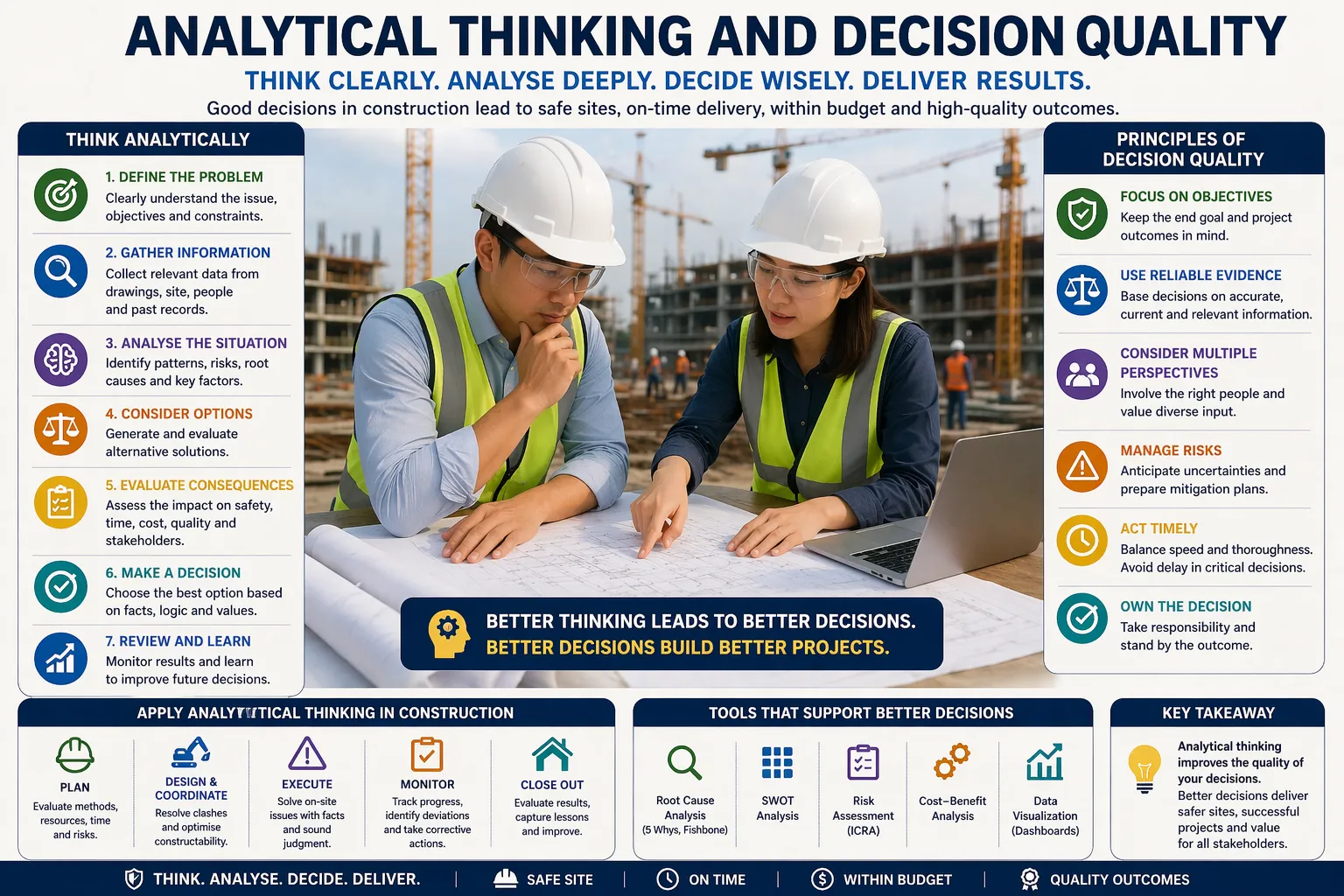
Analytical Thinking and Decision Quality are essential skills for solving problems, evaluating information, and making sound workplace decisions. In every organisation, employees face challenges that require careful thought, clear judgment, and responsible action. Therefore, they need to understand how to break down issues, examine facts, and avoid quick assumptions. Analytical thinking helps individuals look beyond surface information. As a result, they can identify causes, compare options, and make better decisions with confidence.
Understanding Problems Before Acting
Good decision-making begins with understanding the real problem. Sometimes, people respond too quickly to symptoms instead of identifying root causes. Therefore, learners need to ask useful questions, gather relevant information, and examine the situation from different angles. In addition, they must separate facts from opinions, emotions, and assumptions. Guidance from Harvard Business Review highlights the importance of critical thinking, problem-solving, and decision-making in modern workplaces. Consequently, learners can make decisions that are more accurate, fair, and practical.
Evaluating Information and Evidence
Analytical thinking requires careful evaluation of information. Employees must assess whether information is complete, reliable, relevant, and current. Moreover, they need to recognise gaps, contradictions, patterns, and possible risks. This helps them avoid weak conclusions and poor choices. In workplace settings, strong analysis supports better planning, reporting, communication, and operational decisions. As a result, individuals can improve both work quality and organisational outcomes.
Improving Decision Quality
Decision quality depends on clear goals, good information, sound reasoning, and proper evaluation of options. However, decisions can become weak when people rely only on habit, pressure, bias, or incomplete data. Therefore, learners must understand how to compare alternatives, consider consequences, and choose actions that match the situation. Resources from MindTools also provide useful guidance on decision-making tools, critical thinking, and problem-solving techniques. These ideas help learners make more structured and confident decisions.
Reducing Bias and Improving Judgment
Bias can affect how people interpret information and make decisions. For example, they may give too much weight to familiar ideas, first impressions, or personal preferences. Therefore, learners need to slow down their thinking and test their assumptions. In addition, they should seek different views and review evidence before finalising decisions. This approach improves fairness, accuracy, and professional responsibility.
Course Focus and Learning Value
This course helps learners strengthen analytical thinking, problem identification, evidence evaluation, option comparison, risk awareness, and decision quality. Learners will explore practical ways to analyse situations, organise information, challenge assumptions, and make better workplace decisions. Moreover, they will learn how structured thinking improves confidence, accountability, communication, and performance. Ultimately, this course prepares learners to solve problems effectively and make decisions with greater clarity.

Reviews
There are no reviews yet.