

CRW006 – Investigative Questioning Workshop for Health Care Sector (2 Days Workshop)
Schedules:
Upcoming – Dates Coming Soon
Venue:
Confirmation depends on Class size & availability
Note:
Includes Buffet lunch, 2 Tea Breaks (Coffee/Tea & Pastries)
Limited Complimentary Car Parking Coupons are available upon request
Course Fees
- Individual Participation
SGD 1,150
- FULL 2 days Programme
- Course Material
- Certificate of Completion
- Group Rate (3+ Participation)
SGD 1,050 per person
- Venue Hotel or clubhouse
- 2 Tea break & lunch provided
- Cost-effective learning
IN-House Fees
- Minimum (15+ Participation)
SGD 700 per person
- Client need to provide classroom
- No food will be provided
- Cost-effective learning
Course Synopsis
Investigations within the healthcare sector require a high level of sensitivity, professionalism, and procedural discipline. Hospitals, clinics, and healthcare institutions regularly encounter situations that require internal inquiry, such as patient complaints, professional misconduct, clinical negligence allegations, medication errors, regulatory breaches, insurance fraud, or violations of medical protocols. In such circumstances, the ability of healthcare administrators, compliance officers, and supervisors to conduct structured investigative questioning becomes essential to uncover facts while maintaining ethical and professional standards.
The Investigative Questioning Workshop for the Health Care Sector (CRW006) is designed to equip healthcare professionals with the critical skills needed to conduct effective and ethical investigative interviews. The workshop focuses on the strategic use of questioning techniques to obtain accurate information, clarify facts, and resolve disputes in a structured and professional manner. In healthcare environments, investigations often involve multiple stakeholders including doctors, nurses, administrative staff, patients, and external regulators. Poorly structured questioning can lead to misunderstandings, inaccurate documentation, compromised evidence, and potential legal exposure for the institution.
This specialised workshop introduces participants to the principles and techniques of investigative questioning tailored for healthcare environments. Participants will learn how to plan and structure interviews, establish rapport with interviewees, and apply disciplined questioning strategies to gather reliable information. The programme emphasizes the importance of neutrality, clarity, and fairness when conducting inquiries involving sensitive medical or professional matters.
Participants will explore different types of questioning techniques including open-ended questions, probing questions, clarifying questions, reflective questions, and summarizing questions. These questioning methods allow investigators to obtain comprehensive information while encouraging interviewees to provide detailed and accurate responses. The workshop also explains the risks associated with improper questioning practices such as leading questions, accusatory language, or assumptive questioning, which may distort facts or create defensive reactions during interviews.
Healthcare investigations often involve emotionally sensitive situations, particularly when dealing with patient safety incidents or professional conduct concerns. Therefore, the course also highlights the importance of communication awareness, attentive listening, and professional interview control. Participants will learn how tone, pacing, body language, and listening skills influence the quality of information obtained during investigative discussions.
The workshop integrates practical examples drawn from common healthcare investigation scenarios, such as clinical incident reviews, patient complaint investigations, workplace misconduct inquiries, and regulatory compliance checks. These examples help participants understand how questioning strategies can be applied effectively in real healthcare settings. Participants will also learn how to structure investigative questioning logically so that information is obtained progressively and inconsistencies can be identified early.
By the end of the workshop, participants will understand how disciplined questioning improves investigative accuracy, strengthens documentation, and supports defensible conclusions during internal reviews or regulatory assessments. The programme reinforces that effective questioning is not simply about asking questions but about asking the right questions in the right sequence to uncover the truth while preserving professionalism and fairness.
The Investigative Questioning Workshop for the Health Care Sector ultimately aims to strengthen investigative capability within healthcare organisations. By developing structured questioning skills, healthcare professionals can conduct more reliable internal investigations, enhance patient safety accountability, and ensure that organisational decisions are based on accurate and properly obtained information.
Learning Objective
By the end of this workshop, participants will be able to:
- Explain the principles of investigative questioning and their importance in healthcare incident investigations and compliance inquiries.
- Identify common investigation scenarios in healthcare settings, including patient complaints, clinical incidents, professional misconduct, and regulatory breaches.
- Apply structured questioning techniques to obtain accurate and reliable information during healthcare-related inquiries.
- Differentiate between effective and ineffective question types, including open, probing, clarifying, reflective, and summarizing questions.
- Avoid improper questioning practices such as leading, accusatory, assumptive, and misleading questions that may compromise investigative outcomes.
- Develop structured lines of questioning that help investigators establish facts, identify inconsistencies, and clarify medical or procedural issues.
- Conduct investigative interviews with healthcare staff, including doctors, nurses, administrative personnel, and support staff.
- Manage sensitive interviews involving patients or patient representatives with professionalism, empathy, and neutrality.
- Apply active listening and communication awareness to improve the accuracy and completeness of information obtained during interviews.
- Maintain investigative control during interviews through effective pacing, neutral language, and disciplined questioning techniques.
- Document interview findings accurately to support internal investigations, regulatory reviews, and organisational decision-making.
- Strengthen healthcare investigation processes by applying structured questioning frameworks that enhance patient safety accountability and professional standards.
Learning Outline
Upon completion of the workshop, participants will be able to:
- Conduct structured investigative interviews in healthcare environments.
- Apply effective questioning techniques when investigating patient complaints and incidents.
- Use open-ended questions to obtain comprehensive information from healthcare staff.
- Apply probing questions to clarify clinical or procedural details.
- Use clarifying questions to verify medical events and timelines.
- Maintain professional and neutral communication during sensitive healthcare interviews.
- Demonstrate active listening when interviewing doctors, nurses, and administrative staff.
- Handle emotionally sensitive situations involving patients or families professionally.
- Avoid leading or accusatory questions that may influence responses.
- Identify inconsistencies in statements during healthcare investigations.
- Structure interview questions logically to establish facts and timelines.
- Maintain control of investigative interviews through disciplined questioning.
- Document investigative interview findings clearly and accurately.
- Support patient safety investigations through structured fact-finding methods.
- Strengthening accountability and compliance within healthcare organisations.
Key Benefits of the Course
Strengthens the ability of healthcare professionals to conduct structured investigations.
Improves the accuracy and reliability of information obtained during incident inquiries.
Enhances patient safety investigations through disciplined questioning methods.
Reduces misunderstandings during clinical incident reviews and complaint investigations.
Helps healthcare administrators manage sensitive interviews with professionalism and empathy.
Improves communication between investigators, medical staff, and patients.
Enables investigators to identify inconsistencies and gaps in medical incident reports.
Promotes fair and objective inquiry processes in healthcare institutions.
Supports compliance with healthcare regulations and professional standards.
Contributes to a safer and more transparent healthcare environment.
Who Should Attend
- Hospital administrators
- Medical directors and department heads
- Doctors and physicians involved in clinical reviews
- Nursing supervisors and senior nurses
- Healthcare compliance officers
- Patient safety and quality assurance officers
- Hospital risk management personnel
- Clinical audit officers
- Healthcare investigation or incident review teams
- Medical ethics committee members
- Healthcare human resource managers
- Patient relations and complaint handling officers
- Hospital security and safety officers
- Healthcare regulatory liaison officers
- Healthcare operational managers and supervisors
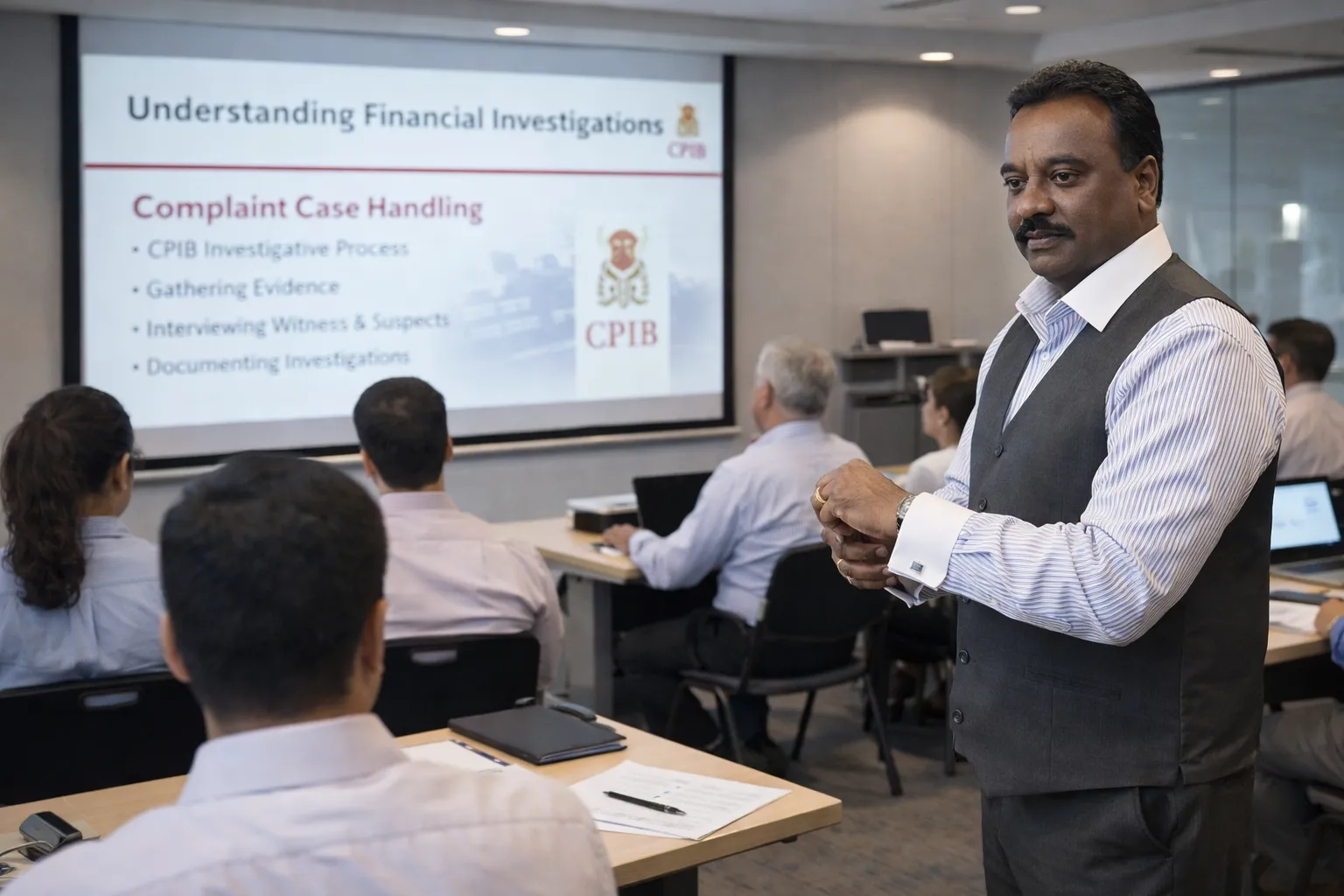
Professional classroom training built for capability, confidence, and impact.
Our instructor-led classroom training combines deep subject-matter expertise with proven instructional methodologies. Participants engage in structured learning, guided discussions, and scenario-based activities that build confidence, competence, and professional judgment.
Methodology
This will be a 1-day course, delivered through an interactive and structured approach that blends theory with practice. The methodology ensures that participants not only understand the 5 Steps Interview model but also apply the skills through hands-on exercises. The following methods will be used:
- Presentation
- Videos
- Case studies
- Demonstrations (Demo)
- Role-Play
- Practice

Hear From Others
Trusted by Government and Corporate Organisations

"This workshop provided a clear and structured approach to investigative questioning that is highly relevant to healthcare environments. The techniques taught helped our team understand how to conduct incident inquiries with greater clarity and professionalism. It has significantly improved how we manage patient safety investigations and internal reviews."
Dr. Samantha Lee
Head of Clinical Governance,
"The training was extremely practical and insightful. The questioning framework introduced during the workshop helped our staff improve communication during incident investigations. It has strengthened our ability to obtain accurate information while maintaining sensitivity when dealing with patients and healthcare staff."
Mr. Daniel Tan
Patient Safety & Risk Manager

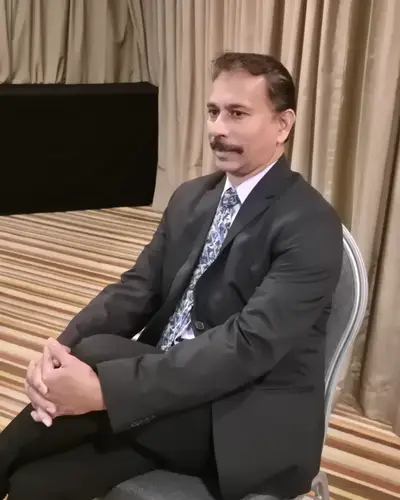
Alan Elangovan
Alan Elangovan is a highly respected Master Trainer and Behavioural Expert with over 30 years of professional experience across the civil service, defence, and corporate sectors. He served 20 years with the Ministry of Home Affairs (MHA) and 7 years with the Singapore Armed Forces (SAF), delivering high-impact training in criminal behaviour analysis, investigation techniques, and security interviewing. He is the Founder and Lead Trainer of LPS Training Services, which was rebranded as LPS Academy in 2025. Through this platform, he has trained more than 125,000 officers from public and private sector organisations, both locally and internationally. Alan is also an accomplished author of five books, a curriculum designer, and an international speaker, widely recognised for translating complex behavioural and investigative concepts into practical, field-ready competencies that enhance professional capability, investigative effectiveness, and organisational performance.
Pannirselvam
Pannirselvam is a highly experienced Operational Trainer with 30 years of distinguished military service and 10 years of professional training experience at LPS Training Services, which is now known as LPS Academy. Throughout his career, he has trained more than 50,000 officers across a wide range of security, operational, and enforcement disciplines. Having conducted operational training assignments across nine countries, he brings extensive field expertise, disciplined instruction, and international operational perspectives to every programme he delivers. His training emphasizes practical application, operational readiness, and real-world scenario learning, ensuring participants gain hands-on competencies and mission-focused skills essential for effective performance in demanding security and enforcement environments.