



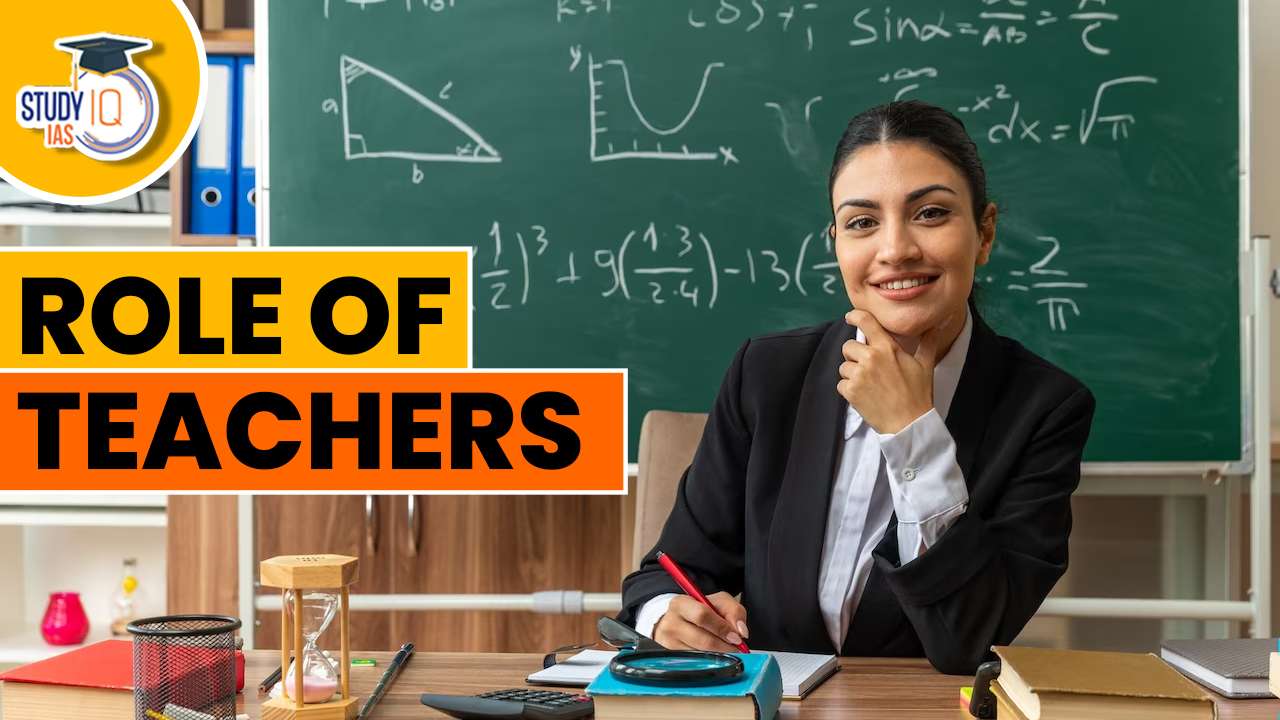
Concerning the function of education, legendary Martin Luther King Jr. was quoted as saying thus: “to teach one to think intensively and to think critically. Intelligence plus character – that is the goal of true education.” Education is meant to empower a child so that he or she can become a productive member of society and so that he or she can transform the behaviors, values, and attitudes that will enable him or her to live together with other people from different parts of the world, from different races, different religions, and different socio-economic backgrounds. Education is meant to be the bridge-builder in all aspects of life. People who are outstanding today and embark on enviable projects were all products of sound and true education. Education is meant to sharpen the intellectual faculty of students.
This stance is also maintained by the UNESCO when it states that “Education should be a means to empower children and adults alike to become active participants in the transformation of their societies. Learning should also focus on the values, attitudes and behaviors which enable individuals to learn to live together in a world characterized by diversity and pluralism.” From the foregoing, it is crystal clear that the role of education in students is not for their own selfish purpose or improvement but for the sake of peaceful co-existence. When the whole of the society is diligently and knowledgeably transformed, every inhabitant will have a sense of belonging and contribute to its growth. In 1960, UNESCO adopted the Convention against Discrimination in Education, which acknowledges the crucial role of education in ensuring equality of opportunity for members of all racial, national or ethnic groups. It was the very first time that a binding instrument in the United Nations system contained a detailed definition of the term DISCRIMINATION. Any form learning that alienates a particular section of the society is not worth to be qualified as true education. Education is meant to provide a level playing ground for all and it is sundry.
Due to the advancement in the structural nature of the society, education has become a tool of socialization and social placement. As societies move through the modernization process, education acquires additional functions. Their importance increases with increasing levels of development and its accompanying social, economic and political changes. For example-as marriage and family structures and the family’s social roles are redefined, formal educational structures become more heavily involved in the socialization process. Schools become primary mechanism for inculcating in young members of society a general knowledge and acceptance of the established socio-cultural system. For the immigrants in new societies formal education serves as a major avenue for the assimilation of these newcomers into the system, in return fostering social integration and national unity. Formal education also imparts to students more specific knowledge and skills required by changing economic system which is beyond the ability of the family to teach its members. On the basis of achievement principles, formal educational attainment becomes an important mechanism for social placement (Essays UK, 2013).
Another role of education in students is that it serves as a means of cultural expansion and innovation. Schools create and transmit culture. Especially at centers of higher education, scholars conduct research that leads to discovery and changes in our social life. For example, medical research at medical institutions has helped increase life expectancy, just as research by sociologists and psychologists helps us take advantage of our longevity. Furthermore, it ensures social transformation and reform. In both modernizing and modernized societies— whether by intent or by accident, formal education can bring about social revisions and reforms. It provides its clients (students) with a more comprehensive, sophisticated view of the present, a vision of alternative possible future, and a detailed knowledge of how social processes work. In human history revolutions and reforms were the products of educational institutions. In modern democratic societies, higher levels of formal education are associated with higher levels of involvement in the political system (Essays UK, 2013).
Learning helps a child to adapt to whatever environment she finds herself in: Education is the multi-faceted socialization process by which a child acquires the behaviors needed to participate effectively in society. Both the conflict perspective and the functionalist perspective acknowledge the importance of education although they differ in terms of the role education plays in modern life. The most potent instrument of socialization is education. With the aid of education, we learn about the society of others, their ways of lives and how we can interrelate without conflict. Education has also provided incredible means of conflict resolution among communities.
Schools today perform a good many latent functions that may not be recognized or intended—like they provide custodial or babysitting service. Schools are the settings in which students develop a variety of interpersonal skills, needed for entering into friendship, participating in community affairs, and relating to others in workplace. Besides, the age segregation of the students in school environment encourages the formation of youth subcultures. Finally, formal compulsory education keeps children and adolescents out of the labor market and so out of competition with adults for jobs (Essays UK, 2013).
In the ideal 21st century classroom, kids are actually excited about going to school, and there is little or no discipline problems because everyone is eager to learn. In this type of classroom activities and lessons are related to the community, whether local or global. Students collaborate with people from different schools and different countries to learn about issues that affect us all, as well as how we can solve them today and in the future. The curriculum in the classroom is designed to incorporate many skills and intelligence levels and makes use of technology and multimedia. The lessons are not based on textbooks, instead they are project based. Skills and content are learned through their research and projects, and textbooks are provided as one of many possible resources (Teacher Certification, 2018).
While it may take some time before schools and teachers are equipped to properly educate in the 21st century once they are the results will be dramatic. Children will be engaged and eager to learn. In fact, they will carry on learning at home and over holidays, and they will have the resources they need to keep learning no matter where they are. This ability to foster a love of learning is truly the role of education in the 21st century (Teacher Certification, 2018).
References
Essays, UK. (November 2013). The Role Of Education In Society Sociology Essay. Retrieved from https://www.ukessays.com/essays/sociology/the-role-of-education-in-society-sociology-essay.php?vref=1
Teacher Certification (2018). The Role of Education in the 21st Century. Retrieved from http://www.teachercertification.org/a/role-of-education-in-the-21st-century.html
UNESCO (2018).Role of Education. Retrieved from http://www.unesco.org/new/en/social-and-human-sciences/themes/fight-against-discrimination/role-of-education/