




CRW018 – Negotiation and Conflict Resolution for Workplace Leaders (2 Days Workshop)
Schedules:
Upcoming – Dates Coming Soon
Venue:
Confirmation depends on Class size & availability
Note:
Includes Buffet lunch, 2 Tea Breaks (Coffee/Tea & Pastries)
Limited Complimentary Car Parking Coupons are available upon request
Course Fees
- Individual Participation
SGD 1,150
- FULL 2 days Programme
- Course Material
- Certificate of Completion
- Group Rate (3+ Participation)
SGD 950 per person
- Venue Hotel or clubhouse
- 2 Tea break & lunch provided
- Cost-effective learning
IN-House Fees
- Minimum (15+ Participation)
SGD 700 per person
- Client need to provide classroom
- No food will be provided
- Cost-effective learning
Course Synopsis
Managing Disagreements and Reaching Constructive Solutions in Professional Environments
In every organization, differences in opinions, priorities, and perspectives are inevitable. When managed effectively, these differences can lead to better ideas, improved collaboration, and stronger decision-making. However, when disagreements are not handled constructively, they can lead to tension, reduced productivity, and strained professional relationships. Leaders and professionals must therefore develop the ability to manage disagreements calmly, communicate effectively, and guide discussions toward constructive solutions. Negotiation and conflict resolution skills are essential competencies that help professionals navigate challenging situations while maintaining positive workplace relationships.
The course Negotiation and Conflict Resolution for Workplace Leaders is designed to equip professionals with practical strategies for managing workplace disagreements and facilitating productive dialogue. The programme focuses on developing negotiation techniques, conflict management strategies, and communication skills that support constructive problem-solving. Participants will learn how to address conflicts professionally, understand different viewpoints, and guide discussions toward mutually acceptable outcomes.
A key focus of the course is the development of effective negotiation techniques. Negotiation in the workplace often involves balancing different interests, priorities, and expectations. Participants will explore structured approaches to negotiation that encourage cooperation and problem-solving rather than confrontation. The course introduces practical techniques that help leaders communicate their positions clearly, listen actively to others, and explore solutions that benefit all parties involved.
The programme also examines the nature of workplace conflict and its underlying causes. Conflicts often arise from misunderstandings, differences in communication styles, unclear expectations, or competing priorities. Participants will learn how to identify the root causes of conflict and address them in a constructive manner. Understanding the dynamics of conflict enables professionals to approach disagreements with greater awareness and professionalism.
Another important aspect of the course is recognizing behavioural signals during conflict situations. Emotional reactions, tone of voice, and behavioural cues can influence how discussions develop during disagreements. Participants will learn how to observe these signals and manage their own responses in order to maintain composure and professionalism. Developing emotional awareness helps leaders prevent conflicts from escalating and promotes more constructive conversations.
The programme also emphasizes the importance of emotional management and communication control during difficult discussions. Leaders often face situations where emotions may influence communication and decision-making. Participants will learn techniques to remain calm, manage emotional responses, and communicate clearly during challenging conversations.
In addition, the course highlights the role of professional problem-solving and collaborative solutions in conflict resolution. Effective leaders focus on finding solutions that address concerns while maintaining positive relationships. Participants will explore approaches that encourage collaboration, mutual respect, and constructive dialogue.
Through interactive discussions, scenario-based exercises, and practical workplace examples, participants will gain hands-on experience in applying negotiation and conflict resolution techniques. The course emphasizes practical application so that participants can confidently manage disagreements and facilitate productive discussions in real workplace situations.
By the end of the programme, participants will have developed the skills to approach workplace disagreements with greater confidence and professionalism. They will be better equipped to manage negotiations, resolve conflicts constructively, and guide discussions toward solutions that strengthen teamwork, communication, and organizational effectiveness.
Learning Objective
- Explain the principles of negotiation and conflict resolution.
Explain how structured negotiation supports constructive workplace discussions. - Describe common causes of workplace conflict.
Describe factors that contribute to disagreements in professional environments. - Identify key stages of the negotiation process.
Identify preparation, discussion, and resolution stages during negotiation. - Interpret behavioural signals during conflict situations.
Interpret verbal and non-verbal cues that appear during disagreements. - Analyse communication approaches used in conflict discussions.
Analyse communication styles that influence conflict outcomes. - Apply negotiation techniques in workplace discussions.
Apply structured approaches to manage disagreements constructively. - Recognize emotional reactions during conflict situations.
Recognize behavioural indicators of tension or frustration. - Interpret communication responses during negotiation.
Interpret signals that indicate agreement, hesitation, or resistance. - Explain strategies for managing difficult conversations.
Explain approaches that maintain professionalism during disagreements. - Demonstrate constructive conflict resolution techniques.
Demonstrate communication skills that support collaborative solutions.
Learning Outline
Upon successful completion of this course, participants will be able to:
- Explain the principles of negotiation and conflict resolution in workplace communication.
- Identify common sources of workplace conflict during professional interactions.
- Recognize key stages in negotiation discussions during workplace situations.
- Interpret behavioural cues displayed during conflict conversations.
- Demonstrate effective listening skills during negotiation discussions.
- Apply negotiation techniques to reach constructive solutions.
- Recognize emotional responses that may arise during conflict situations.
- Respond appropriately to behavioural signals during disagreements.
- Identify communication barriers that may escalate conflicts.
- Apply structured communication techniques during conflict discussions.
- Manage workplace disagreements professionally during conversations.
- Adapt negotiation approaches to different workplace situations.
- Encourage collaborative solutions during workplace conflicts.
- Demonstrate professional judgement during negotiation discussions.
- Demonstrate improved confidence when managing workplace disagreements.
Key Benefits of the Course
- Improves Negotiation Skills
Participants learn structured approaches to workplace negotiation. - Enhances Conflict Management Skills
Helps professionals manage disagreements constructively. - Strengthens Communication During Difficult Discussions
Participants learn how to maintain professionalism during conflicts. - Improves Emotional Control in Workplace Situations
Participants develop techniques to manage emotions during discussions. - Enhances Listening and Communication Awareness
Encourages active listening during negotiation conversations. - Promotes Collaborative Problem Solving
Participants learn to guide discussions toward mutual solutions. - Reduces Workplace Misunderstandings
Improves clarity and communication during disagreements. - Strengthens Leadership Decision Communication
Leaders learn how to communicate decisions during negotiations. - Improves Professional Relationships
Constructive conflict management supports stronger teamwork. - Enhances Leadership Confidence
Participants gain confidence when handling workplace disagreements.
Who Should Attend
This programme is designed for professionals responsible for managing workplace communication and resolving disagreements.
- Senior Executives and Directors
Leaders responsible for managing high-level discussions and decisions. - Managers and Team Leaders
Professionals responsible for guiding teams and resolving conflicts. - Supervisors and Department Heads
Leaders managing daily operations and team communication. - Project Managers
Professionals coordinating teams and managing project discussions. - Human Resource Managers and Executives
HR professionals responsible for managing workplace disputes. - Corporate Executives
Professionals involved in decision discussions and negotiations. - Sales and Business Development Managers
Professionals who negotiate with clients and partners. - Corporate Trainers and Facilitators
Professionals who manage group discussions and learning environments. - Professionals Preparing for Leadership Roles
Employees aspiring to develop conflict management skills. - Supervisors and Professionals in Corporate Organisations
Individuals responsible for workplace communication and team interactions.
Professional classroom training built for capability, confidence, and impact.
Our instructor-led classroom training combines deep subject-matter expertise with proven instructional methodologies. Participants engage in structured learning, guided discussions, and scenario-based activities that build confidence, competence, and professional judgment.

Methodology
This will be a 1-day course, delivered through an interactive and structured approach that blends theory with practice. The methodology ensures that participants not only understand the 5 Steps Interview model but also apply the skills through hands-on exercises. The following methods will be used:
- Presentation
- Videos
- Case studies
- Demonstrations (Demo)
- Role-Play
- Practice

Hear From Others
Trusted by Government and Corporate Organisations

“The trainer delivered the programme in a very practical and engaging manner. The training helped supervisors understand negotiation techniques and manage workplace disagreements more effectively. It provided useful strategies for resolving conflicts while maintaining professionalism.”
Kenneth Lim
Operations Supervisor, Singapore Post
“The trainer explained negotiation and conflict management clearly with practical examples. The programme improved our confidence when handling difficult discussions with colleagues and teams. It is highly beneficial for supervisors responsible for managing workplace communication.”
Nur Farhana Binte Ahmad
Service Supervisor, NTUC Learning Hub

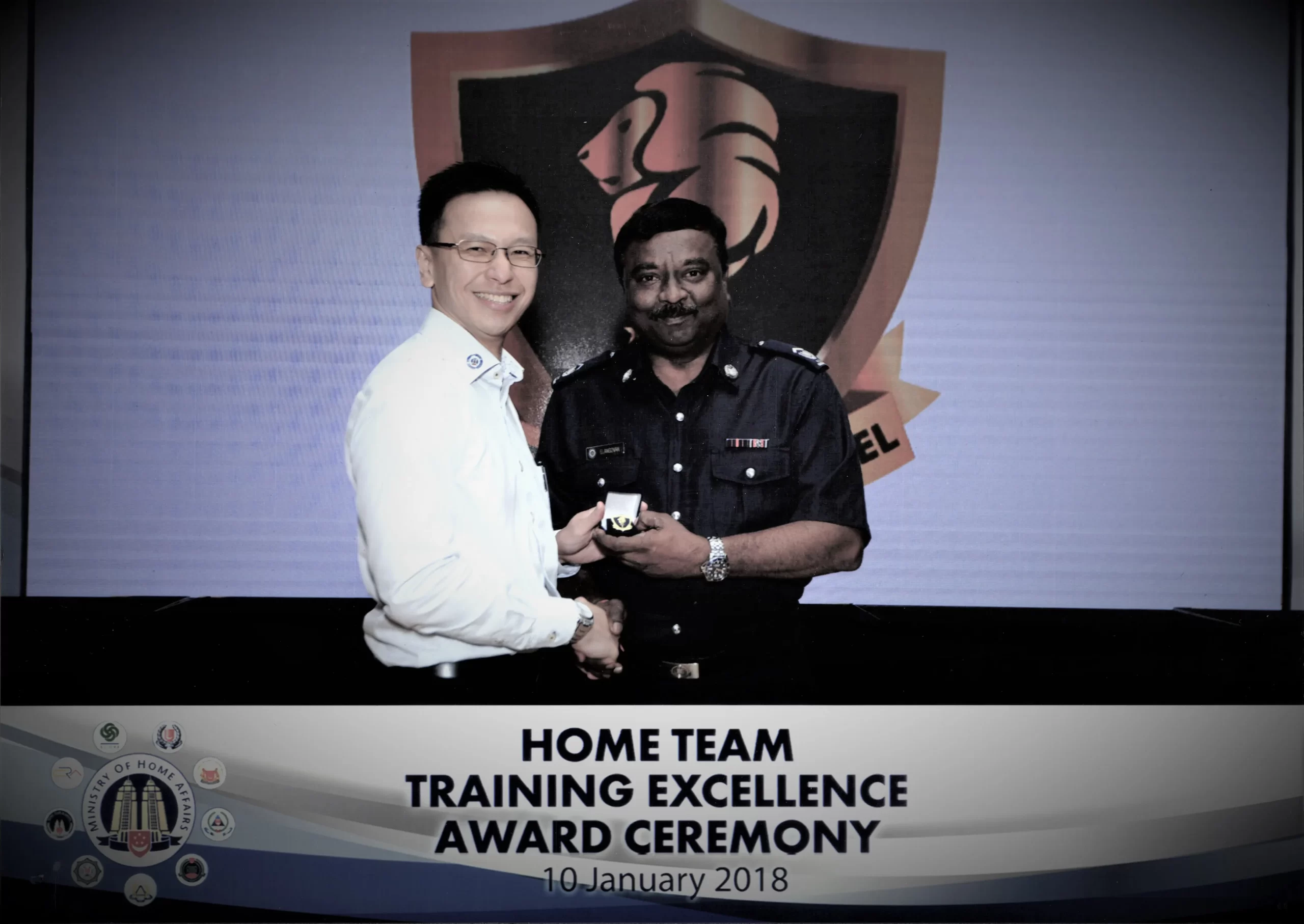
Alan Elangovan
Alan Elangovan is a highly respected Master Trainer and Behavioural Expert with over 30 years of professional experience across the civil service, defence, and corporate sectors. He served 20 years with the Ministry of Home Affairs (MHA) and 7 years with the Singapore Armed Forces (SAF), delivering high-impact training in criminal behaviour analysis, investigation techniques, and security interviewing. He is the Founder and Lead Trainer of LPS Training Services, which was rebranded as LPS Academy in 2025. Through this platform, he has trained more than 125,000 officers from public and private sector organisations, both locally and internationally. Alan is also an accomplished author of five books, a curriculum designer, and an international speaker, widely recognised for translating complex behavioural and investigative concepts into practical, field-ready competencies that enhance professional capability, investigative effectiveness, and organisational performance.
Pannirselvam
Pannirselvam is a highly experienced Operational Trainer with 30 years of distinguished military service and 10 years of professional training experience at LPS Training Services, which is now known as LPS Academy. Throughout his career, he has trained more than 50,000 officers across a wide range of security, operational, and enforcement disciplines. Having conducted operational training assignments across nine countries, he brings extensive field expertise, disciplined instruction, and international operational perspectives to every programme he delivers. His training emphasizes practical application, operational readiness, and real-world scenario learning, ensuring participants gain hands-on competencies and mission-focused skills essential for effective performance in demanding security and enforcement environments.