


CRW002 - Investigative Interview Workshop: The 5 Steps of Interview (2 Days Workshop)
Schedules:
Upcoming – Dates Coming Soon
Venue:
Confirmation depends on Class size & availability
Note:
Includes Buffet lunch, 2 Tea Breaks (Coffee/Tea & Pastries)
Limited Complimentary Car Parking Coupons are available upon request
Course Fees
- Individual Participation
SGD 1,150
- FULL 2 days Programme
- Course Material
- Certificate of Completion
- Group Rate (3+ Participation)
SGD 1,050 per person
- Venue Hotel or clubhouse
- 2 Tea break & lunch provided
- Cost-effective learning
IN-House Fees
- Minimum (15+ Participation)
SGD 700 per person
- Client need to provide classroom
- No food will be provided
- Cost-effective learning
Course Synopsis
Workplace investigations and professional interviews require more than simply asking questions. They demand a structured approach, emotional awareness, analytical thinking, and the ability to gather reliable information without bias or intimidation. In many organizations, the outcome of an investigation, disciplinary inquiry, or internal review depends heavily on the quality of the interview conducted. Poor interviewing techniques may lead to incomplete information, misunderstandings, unfair conclusions, or even legal complications. This course, “Investigative Interview: The 5 Steps of Interview at Workplace,” provides professionals with a practical framework to conduct interviews confidently, ethically, and effectively.
The programme introduces participants to a five-step investigative interviewing model designed specifically for workplace environments. These steps guide interviewers through a logical and professional process that includes building rapport, encouraging open narratives, structuring effective questioning, verifying information, and closing interviews professionally. By applying this structured approach, participants will be able to transform ordinary conversations into purposeful investigative interviews that produce reliable and meaningful outcomes.
The course begins with Rapport Building, which focuses on establishing trust and cooperation at the beginning of the interview. Participants will learn how to recognize stress indicators, maintain calmness, and demonstrate emotional control during conversations. Building rapport is essential when interviewing individuals who may feel anxious, defensive, or uncertain. By balancing empathy with authority, interviewers can create a professional environment where interviewees feel comfortable sharing information.
The second step, Free Narrative, encourages interviewees to describe events in their own words without interruption. This stage allows interviewers to observe natural communication patterns and establish a behavioural baseline. Understanding the baseline helps interviewers identify later deviations that may indicate stress, uncertainty, or inconsistencies in the interviewee’s account. Participants will practice active listening techniques and learn how to observe verbal, non-verbal, and paralinguistic cues during conversations.
The third step focuses on Structured Questioning, which enables interviewers to clarify information and guide discussions effectively. Participants will learn how to apply questioning techniques that move from broad, open-ended questions to more specific inquiries. The course emphasizes the importance of avoiding leading or suggestive questions that could influence responses. Effective questioning strategies help interviewers gather clear and accurate information while maintaining fairness and neutrality.
The fourth step, Verification and Deviation, concentrates on evaluating the reliability of the information obtained. Participants will learn how to identify behavioural deviations from the established baseline and analyze whether they indicate stress, confusion, or potential deception. Techniques such as rephrasing questions, cross-checking statements, and comparing responses with available evidence will be introduced to help interviewers verify the accuracy of information.
The final step focuses on Professional Closure and Truth Extraction. Participants will learn how to summarize key points discussed during the interview, confirm information with the interviewee, and encourage final clarifications or disclosures. A respectful closure ensures that the interaction remains professional and maintains cooperation even after the interview ends.
Throughout the programme, learning will be reinforced through presentations, demonstrations, case studies, and role-play exercises. These practical activities allow participants to apply the five-step model in realistic scenarios and develop confidence in their interviewing abilities.
By the end of the course, participants will possess a structured and professional approach to workplace investigative interviewing. They will be better equipped to manage sensitive conversations, analyze behaviour, ask effective questions, and extract reliable information. Ultimately, the course strengthens the quality of workplace investigations, improves decision-making, and promotes a culture of fairness, professionalism, and accountability within organizations.
Learning Objective
- Explain the principles and structure of investigative interviewing in workplace investigations.
Demonstrate effective rapport-building techniques to establish trust and cooperation.
Apply active listening skills to capture accurate information during interviews.
Encourage interviewees to provide free and uninterrupted narratives.
Identify baseline verbal, non-verbal, and paralinguistic behaviours during interviews.
Detect deviations from baseline behaviours that may indicate stress or inconsistency.
Apply structured questioning techniques to obtain clear and relevant information.
Verify and validate information obtained during investigative interviews.
Manage challenging or defensive interview situations professionally.
Conduct professional interview closure while maintaining respect and cooperation.
Learning Outline
- Learners will understand the investigative interview framework and its application in workplace investigations.
- Learners will build rapport with interviewees to encourage cooperation and open communication.
- Learners will demonstrate effective listening and observation skills during interviews.
- Learners will facilitate clear and structured narratives from interviewees.
- Learners will identify behavioural baselines using verbal and non-verbal cues.
- Learners will analyse behavioural deviations to assess stress or inconsistencies.
- Learners will use appropriate questioning strategies to obtain accurate information.
- Learners will confirm facts through verification and clarification techniques.
- Learners will handle difficult interview situations with professionalism and control.
- Learners will complete interviews effectively by summarizing findings and encouraging final disclosures.
Key Benefits of the Course
Develops structured investigative interviewing skills for workplace investigations.
Enhances the ability to build rapport and establish trust with interviewees.
Improves active listening and observation skills during interviews.
Strengthens the ability to interpret verbal and non-verbal behavioural cues.
Helps identify baseline behaviours and detect deviations effectively.
Improves questioning techniques to obtain accurate and relevant information.
Reduces the risk of bias, assumptions, and leading questions during interviews.
Strengthens the ability to verify and validate information systematically.
Enhances confidence in managing sensitive and high-pressure interview situations.
Provides practical techniques for handling defensive or uncooperative interviewees.
Improves decision-making by ensuring accurate fact-gathering.
Promotes ethical and professional interviewing practices.
Supports fair and transparent workplace investigations.
Builds transferable communication and behavioural analysis skills.
Strengthens organizational accountability and professionalism in investigative processes.
Who Should Attend
This course is designed for professionals who are required to conduct interviews, gather facts, assess credibility, and manage sensitive workplace situations in a fair and professional manner.
- HR Managers and HR Executives involved in recruitment interviews, disciplinary inquiries, grievance handling, and internal investigations.
- Managers, Supervisors, and Team Leaders who handle staff performance issues, conflicts, misconduct, or workplace complaints.
- Compliance, Risk, and Corporate Governance Officers responsible for fact-finding, regulatory compliance, and internal reviews.
- Security and Enforcement Officers conducting interviews, statements, screening, or preliminary investigations.
- Investigators and Audit Professionals who rely on structured questioning to identify inconsistencies, gaps, and risks.
- Business Owners, Entrepreneurs, and Employers who need to make informed decisions based on accurate information.
- Educators, Trainers, and Lecturers who use questioning to assess understanding, behaviour, and learning outcomes.
- Sales and Customer-Facing Professionals who need to uncover concerns, objections, and underlying issues through effective questioning.
- Employees and Professionals involved in workplace interviews, inquiries, or conflict resolution processes.
- Anyone who frequently interacts with people and needs to improve questioning, listening, and behavioural observation skills for better professional outcomes.
Professional classroom training built for capability, confidence, and impact.
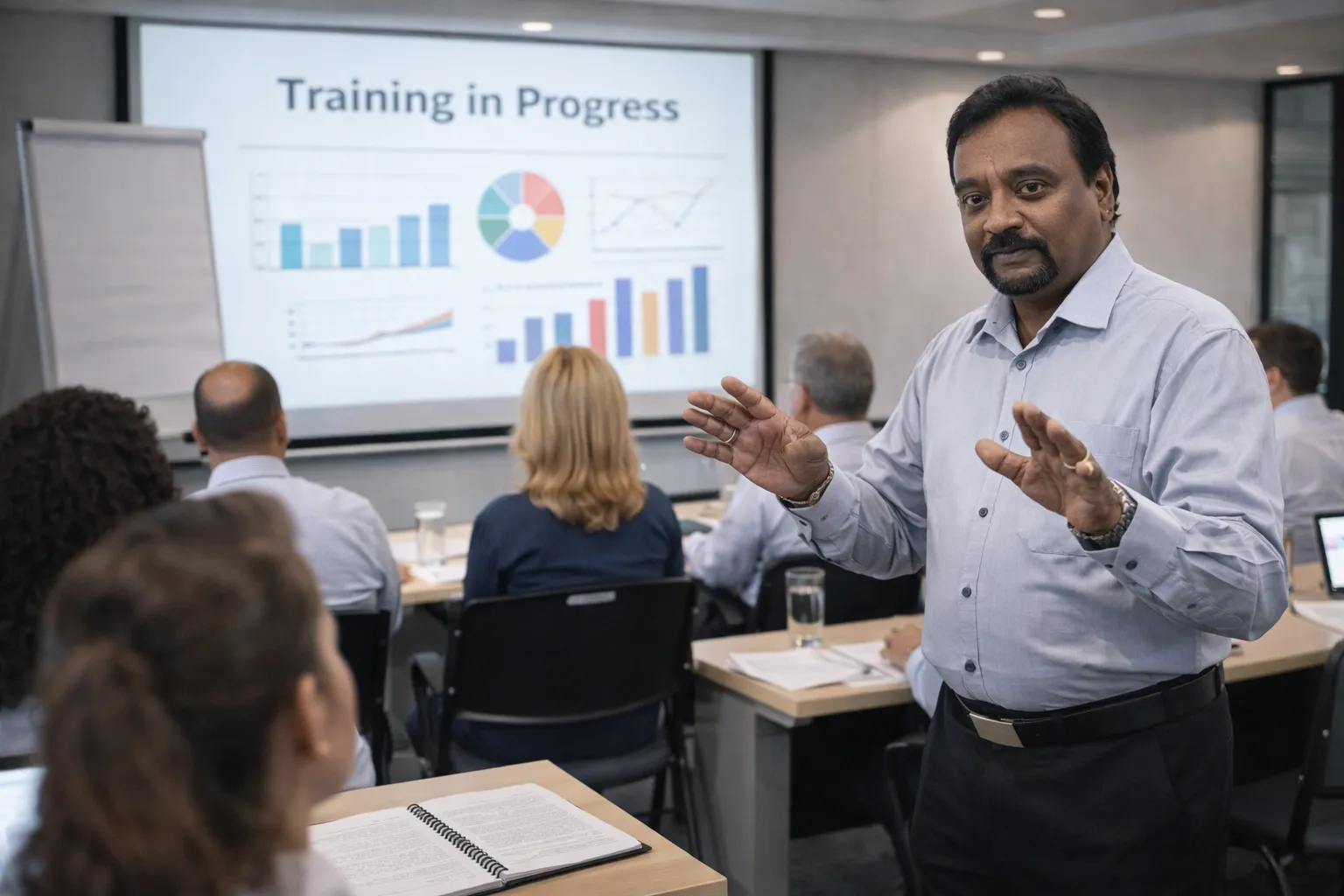
Our instructor-led classroom training combines deep subject-matter expertise with proven instructional methodologies. Participants engage in structured learning, guided discussions, and scenario-based activities that build confidence, competence, and professional judgment.
Methodology
This will be a 1-day course, delivered through an interactive and structured approach that blends theory with practice. The methodology ensures that participants not only understand the 5 Steps Interview model but also apply the skills through hands-on exercises. The following methods will be used:
- Presentation
- Videos
- Case studies
- Demonstrations (Demo)
- Role-Play
- Practice

Hear From Others
Trusted by Government and Corporate Organisations

"This workshop provided a clear and practical framework for conducting investigative interviews. The 5 Steps model helped me understand how to build rapport, ask structured questions, and verify information effectively. The role-play sessions were particularly valuable, allowing us to practice real scenarios and improve our interviewing confidence."
Anthony Toh
ST Engineering

Alan Elangovan
Alan Elangovan is a highly respected Master Trainer and Behavioural Expert with over 30 years of professional experience across the civil service, defence, and corporate sectors. He served 20 years with the Ministry of Home Affairs (MHA) and 7 years with the Singapore Armed Forces (SAF), delivering high-impact training in criminal behaviour analysis, investigation techniques, and security interviewing. He is the Founder and Lead Trainer of LPS Training Services, which was rebranded as LPS Academy in 2025. Through this platform, he has trained more than 125,000 officers from public and private sector organisations, both locally and internationally. Alan is also an accomplished author of five books, a curriculum designer, and an international speaker, widely recognised for translating complex behavioural and investigative concepts into practical, field-ready competencies that enhance professional capability, investigative effectiveness, and organisational performance.
Pannirselvam
Pannirselvam is a highly experienced Operational Trainer with 30 years of distinguished military service and 10 years of professional training experience at LPS Training Services, which is now known as LPS Academy. Throughout his career, he has trained more than 50,000 officers across a wide range of security, operational, and enforcement disciplines. Having conducted operational training assignments across nine countries, he brings extensive field expertise, disciplined instruction, and international operational perspectives to every programme he delivers. His training emphasizes practical application, operational readiness, and real-world scenario learning, ensuring participants gain hands-on competencies and mission-focused skills essential for effective performance in demanding security and enforcement environments.