


Investigation Models

Investigation models are structured frameworks that guide investigators in collecting, analysing, and interpreting information. They ensure systematic inquiry, reduce bias, and support evidence-based conclusions, helping determine what happened, how it occurred, and who is responsible in a clear, consistent, and defensible manner.

BEHAVE Investigative Framework (Alan Elangovan)

The Alan Elangovan BEHAVE Model focuses on analysing Behaviour, Emotions, Habits, Actions, Verbal cues, and Environment. It guides investigators in interpreting human behaviour, detecting deception, and understanding intent, enabling accurate assessments, improved interviewing, and effective decision-making in complex investigative and security situations.

Rapport-Based Interviewing Model (Clifford Stott Influence)

The Rapport-Based Interviewing Model, influenced by Clifford Stott, emphasises building trust, empathy, and communication to encourage cooperation. It supports investigators in reducing resistance, improving information quality, and fostering voluntary disclosure, making it highly effective in interviews, interrogations, and sensitive investigative contexts.

Reality Monitoring Model (Marcia K. Johnson)

The Marcia K. Johnson Reality Monitoring Model distinguishes between real and fabricated memories by analysing sensory detail, contextual information, and cognitive processes. It helps investigators assess statement credibility, detect deception, and differentiate genuine experiences from imagined events, supporting accurate evaluations in interviews and forensic investigations.

Situational Awareness Model (Mica Endsley)

The Mica Endsley Situational Awareness Model explains perception, comprehension, and projection of environmental elements in dynamic settings. It helps investigators maintain awareness, anticipate developments, and make informed decisions, enhancing operational effectiveness, risk management, and response capabilities in complex investigative and security environments.

Victim-Offender Interaction Model (Criminal Behavioural Research Influence)

The Victim-Offender Interaction Model, grounded in Criminal Behavioral Research, examines the dynamics between victim and offender. It analyses patterns of interaction, power imbalance, and situational triggers, helping investigators distinguish conflict from victimisation, identify repeated targeting, and support accurate classification and intervention in criminal and social incidents.

Advanced PEACE Interviewing Model (UK Investigative Practice Evolution)

The Advanced PEACE Interviewing Model, evolved from UK Police practice, enhances the structured approach of Preparation and Planning, Engage and Explain, Account, Closure, and Evaluation. It emphasises ethical interviewing, rapport building, and information accuracy, supporting reliable evidence gathering and professional investigative interviewing standards.

Red Team Analysis Model (Military and Intelligence Practice)

The Red Team Analysis Model, rooted in Military Strategy and intelligence practice, challenges assumptions by adopting an adversary perspective. It helps investigators identify vulnerabilities, test strategies, and anticipate threats, strengthening decision-making, reducing bias, and improving operational readiness in complex investigative and security environments.

Intelligence Failure Analysis Model (Intelligence Community Practice)

The Intelligence Failure Analysis Model, grounded in Intelligence Analysis practice, examines why intelligence breakdowns occur. It analyses cognitive biases, information gaps, and organisational issues, helping investigators identify weaknesses, improve analytical processes, and prevent future failures, strengthening decision-making, accountability, and effectiveness in intelligence and investigative operations.

Case Theory Model (Legal Practice Influence)

The Case Theory Model, influenced by Legal Practice, involves constructing a coherent narrative explaining how and why an event occurred. It guides investigators in organising evidence, testing hypotheses, and aligning facts with legal elements, ensuring cases are logically structured, persuasive, and capable of withstanding legal scrutiny.

Investigative Cycle Model (General Investigative Practice)

The Investigative Cycle Model, grounded in Investigative Practice, outlines a structured process from information gathering to analysis, action, and review. It helps investigators manage cases systematically, ensure evidence-based decisions, and continuously refine strategies, supporting effective, accountable, and adaptable investigations across diverse operational contexts.

Environmental Criminology Integration Model (Paul Brantingham & Patricia Brantingham)

The Paul Brantingham and Patricia Brantingham Environmental Criminology Integration Model combines spatial, behavioural, and environmental factors to analyse crime patterns. It integrates routine activity, crime pattern, and rational choice perspectives, helping investigators understand offender movement, identify hotspots, and design targeted prevention and investigative strategies.

Crime Script Analysis Model (Derek Cornish)

The Derek Cornish Crime Script Analysis Model breaks crimes into sequential steps, from preparation to completion. It helps investigators understand offender actions, identify intervention points, and disrupt criminal processes, supporting prevention strategies, situational analysis, and targeted investigative planning across different crime types.

Forensic Intelligence Model (Pierre Margot)

The Pierre Margot Forensic Intelligence Model integrates forensic science with intelligence analysis to support proactive investigations. It uses trace evidence, patterns, and data interpretation to identify links between crimes, support decision-making, and enhance crime prevention, moving beyond traditional reactive forensic approaches toward strategic investigative intelligence.

National Intelligence Model (NIM) (UK National Police)

The National Intelligence Model (NIM), developed by UK National Police, provides a structured approach to intelligence-led policing. It integrates data collection, analysis, and decision-making to prioritise threats, allocate resources, and support strategic and tactical operations, enhancing effectiveness in crime prevention and investigative processes.

3i Model (Jerry Ratcliffe)

The Jerry Ratcliffe 3i Model (Interpret, Influence, Impact) supports intelligence-led policing by linking crime analysis to decision-making. It helps investigators interpret data, influence operational responses, and assess outcomes, ensuring intelligence is effectively used to guide strategies, reduce crime, and improve policing and investigative performance.

SARA Model (Herman Goldstein)

The Herman Goldstein SARA Model (Scanning, Analysis, Response, Assessment) provides a structured problem-solving approach in policing. It helps investigators identify recurring issues, analyse causes, implement targeted responses, and evaluate effectiveness, supporting proactive crime prevention, community policing, and evidence-based decision-making in investigative and operational environments.

Criminal Decision Process Model (Derek Cornish & Ronald Clarke)

The Derek Cornish and Ronald V. Clarke Criminal Decision Process Model analyses how offenders make decisions before, during, and after crimes. It examines rational choices, risks, rewards, and situational factors, helping investigators understand behaviour, anticipate actions, and develop effective prevention, profiling, and investigative strategies.

098 ALAN Model (Alan Elangovan)

The Alan Elangovan ALAN Model integrates behavioural analysis, structured questioning, and situational awareness to guide investigations. It emphasises adaptive thinking, layered information gathering, and real-time assessment, enabling investigators to detect deception, interpret intent, and make precise, evidence-based decisions in complex investigative environments.

Questioning Funnel Model (Socratic Method Influence)

The Questioning Funnel Model, influenced by the Socratic Method, guides investigators from broad, exploratory questions to precise, focused inquiries. It enhances critical thinking, uncovers deeper insights, clarifies inconsistencies, and supports effective information gathering, making it valuable in interviews, interrogations, and analytical investigative processes.

Interview Funnel Model (John E. Reid Influence)

The Interview Funnel Model, influenced by John E. Reid, structures questioning from broad, open-ended inquiries to focused, specific questions. It helps investigators gather accurate information, clarify details, and assess credibility, supporting effective interviews, statement analysis, and progressive disclosure techniques in both cooperative and resistant subject interactions.

Arrest & Detention Decision Model (Criminal Procedure Practice)

The Arrest & Detention Decision Model, grounded in Criminal Procedure practice, guides investigators in determining when to lawfully arrest or detain individuals. It considers legal thresholds, evidence sufficiency, risk factors, and procedural safeguards, ensuring decisions are justified, proportionate, and compliant with due process and investigative requirements.

Entrapment Avoidance Model (Legal Doctrine Influence)

The Entrapment Avoidance Model, influenced by Criminal Law doctrine, ensures investigators do not induce individuals to commit offences they would not otherwise commit. It guides lawful conduct in undercover operations, preserving evidence integrity, protecting suspects’ rights, and ensuring investigations withstand legal scrutiny and judicial review.

Undercover Operations Model (Law Enforcement Practice)

The Undercover Operations Model, based on Law Enforcement practice, involves covert infiltration to gather evidence and intelligence. It focuses on identity creation, role immersion, and controlled engagement with suspects, enabling investigators to uncover hidden activities, disrupt criminal networks, and support prosecutions while maintaining operational security and legal compliance.

Surveillance Detection Route Model (CIA – Intelligence Tradecraft)

The Surveillance Detection Route Model, derived from Central Intelligence Agency tradecraft, focuses on identifying and evading surveillance through planned movement patterns. It enables investigators and operatives to detect hostile monitoring, confirm surveillance presence, and enhance operational security, supporting covert operations, counter-surveillance, and sensitive investigative missions.

SIGINT Analysis Model (National Security Agency Influence)

The SIGINT Analysis Model, influenced by the National Security Agency, focuses on collecting and analysing electronic communications and signal data. It supports investigators in intercepting, decoding, and interpreting transmissions, enabling intelligence gathering, threat detection, and strategic decision-making in cyber, military, and national security investigations.

HUMINT Collection Model (U.S. Intelligence Community)

The HUMINT Collection Model, developed within the United States Intelligence Community, focuses on gathering intelligence through human sources. It involves recruitment, handling, and debriefing of informants to obtain valuable information, supporting investigations, threat assessments, and operational decision-making in security, law enforcement, and intelligence environments.

OSINT Investigation Model (Michael Bazzell Influence)

The OSINT Investigation Model, influenced by Michael Bazzell, focuses on collecting and analysing publicly available information from digital and open sources. It supports investigators in identifying leads, verifying identities, tracking activities, and gathering intelligence ethically, enhancing investigative efficiency in cyber, financial, and criminal investigations.

MITRE ATT&CK Framework (MITRE Corporation)

The MITRE Corporation ATT&CK Framework is a comprehensive knowledge base of adversary tactics, techniques, and procedures. It enables investigators to analyse cyber threats, map attacker behaviour, strengthen detection, and improve incident response, supporting intelligence-driven cybersecurity investigations and defence strategies across complex digital environments.

Cyber Kill Chain Model (Lockheed Martin)

The Lockheed Martin Cyber Kill Chain Model outlines stages of a cyberattack, from reconnaissance to actions on objectives. It enables investigators to detect, analyse, and disrupt threats at each phase, strengthening cybersecurity, incident response, and forensic investigations through structured understanding of attacker behaviour and intrusion processes.

Beneficial Ownership Analysis Model (FATF Influence)

The Beneficial Ownership Analysis Model, guided by Financial Action Task Force standards, identifies the true individuals controlling assets or entities behind complex structures. It supports investigations into money laundering, corruption, and tax evasion by uncovering hidden ownership, enhancing transparency, and enabling effective enforcement and asset recovery actions.

Asset Tracing Model (Financial Investigation Practice)

The Asset Tracing Model, influenced by Financial Investigation practices, focuses on identifying, tracking, and recovering assets linked to criminal activity. It analyses financial trails, ownership structures, and transactions, enabling investigators to uncover hidden wealth, support prosecution, and facilitate asset recovery in fraud, corruption, and money laundering cases.
Financial Profiling Model (Forensic Accounting Practice Influence)

The Financial Profiling Model, influenced by Forensic Accounting practices, analyses financial behaviours, transaction patterns, and asset movements to detect irregularities. It supports investigators in identifying fraud, money laundering, and illicit enrichment, enabling evidence-based tracing of funds, financial reconstruction, and strategic decision-making in complex financial investigations.

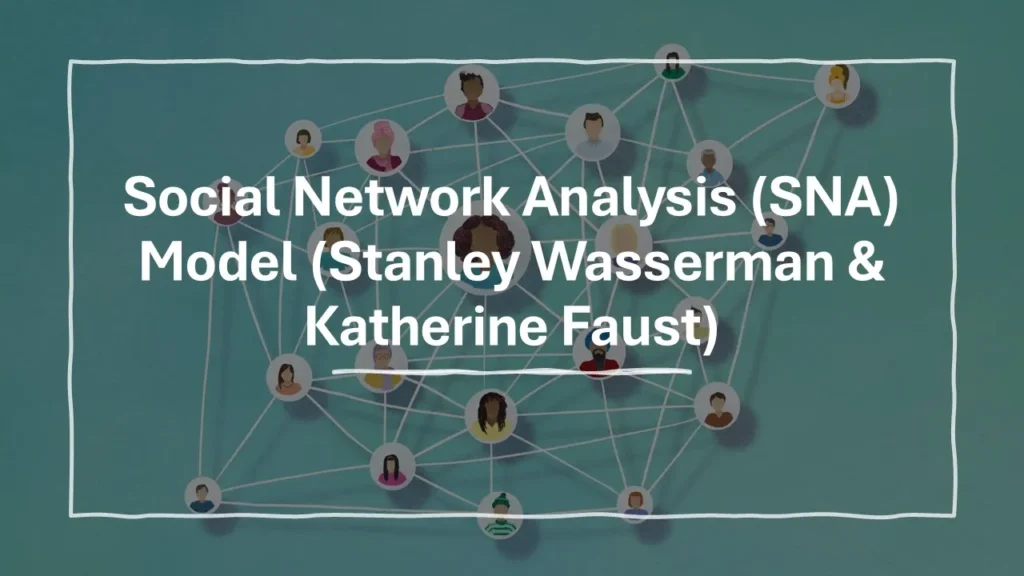
Social Network Analysis (SNA) Model (Stanley Wasserman & Katherine Faust)

The Stanley Wasserman and Katherine Faust Social Network Analysis Model examines relationships, structures, and interactions within networks. It helps investigators map connections, identify influential actors, detect hidden groups, and analyse information flow, supporting intelligence-led investigations, disruption of criminal networks, and strategic decision-making in complex investigative environments.

Network Analysis Model (Harrison C. White Influence)

The Harrison C. White Network Analysis Model examines relationships and interactions within criminal networks. It identifies key actors, communication patterns, and influence structures, enabling investigators to disrupt organized crime, uncover hidden connections, and target critical nodes, enhancing intelligence-led operations and strategic decision-making in complex investigative environments.

Hot Spot Policing Model (Lawrence Sherman)

The Lawrence W. Sherman Hot Spot Policing Model focuses on identifying and targeting high-crime areas where offences cluster. By concentrating police resources in these hotspots, it enhances deterrence, disrupts criminal activity, and improves public safety, supporting data-driven decision-making and effective deployment strategies in modern investigative and policing environments.

Crime Pattern Theory (Paul Brantingham & Patricia Brantingham)

The Paul Brantingham and Patricia Brantingham Crime Pattern Theory explains how crimes occur based on offenders’ routine movements within familiar environments. It highlights nodes, paths, and edges that shape opportunities, helping investigators predict crime locations, understand spatial behavior, and design targeted prevention and enforcement strategies effectively.

Broken Windows Theory (James Q. Wilson & George L. Kelling)

The James Q. Wilson and George L. Kelling Broken Windows Theory suggests that visible disorder, such as vandalism and neglect, encourages further crime. Early intervention, environmental maintenance, and proactive policing help prevent escalation, reinforce social norms, and support effective crime control and investigative awareness in public environments.

Situational Crime Prevention Model (Ronald V. Clarke)

The Ronald V. Clarke Situational Crime Prevention Model focuses on reducing opportunities for crime by altering immediate environments. It applies practical techniques such as increasing effort, raising risks, reducing rewards, removing excuses, and limiting provocations. Widely used in security planning, it supports proactive prevention rather than reactive investigation strategies.

Bow-Tie Risk Model (Royal Dutch Shell Influence)

The Bow-Tie Risk Model influenced by Royal Dutch Shell visually links potential causes, preventive controls, consequences, and mitigation measures, enabling clear understanding of risk pathways and strengthening proactive risk management and incident prevention strategies.

Root Cause Analysis (RCA) (Kaoru Ishikawa Influence)

The Root Cause Analysis influenced by Kaoru Ishikawa identifies underlying causes of problems through systematic investigation, using tools like fishbone diagrams and “5 Whys,” enabling effective corrective actions, prevention of recurrence, and continuous improvement in processes and investigations.

Analytical Hierarchy Process (Thomas L. Saaty)

The Analytical Hierarchy Process developed by Thomas L. Saaty structures complex decisions into hierarchical levels, using pairwise comparisons and weighting to evaluate alternatives, enabling systematic, quantitative, and consistent decision-making across multiple criteria and priorities.

Hypothesis Testing Model (Karl Popper)

The Hypothesis Testing Model developed by Karl Popper emphasizes forming testable hypotheses and attempting to falsify them through evidence, enabling objective analysis, critical thinking, and systematic validation of conclusions in investigative and scientific inquiry.

ABC Analysis Model (B.F. Skinner)

The ABC Analysis Model developed by B. F. Skinner examines behavior through Antecedents, Behavior, and Consequences, helping identify triggers, actions, and outcomes to understand, predict, and modify behavior in investigative, educational, and organizational contexts.

5W1H Analysis Model (Rudyard Kipling Influence)

The 5W1H Analysis Model influenced by Rudyard Kipling uses six key questions—Who, What, When, Where, Why, and How—to systematically gather information, structure analysis, and ensure comprehensive understanding in investigations, problem-solving, and decision-making processes.

OODA Loop Model (John Boyd)

The OODA Loop Model developed by John Boyd describes a rapid decision cycle of Observe, Orient, Decide, and Act, enabling individuals and organizations to adapt quickly, outpace adversaries, and maintain strategic advantage in dynamic, high-pressure environments.

Intelligence Cycle Model (Sherman Kent)

The Intelligence Cycle Model developed by Sherman Kent describes a structured process of direction, collection, processing, analysis, and dissemination, enabling systematic production of actionable intelligence to support informed decision-making in security, policing, and national defense contexts.

Evidence Lifecycle Model (Forensic Science Practice)

The Evidence Lifecycle Model influenced by forensic science practice outlines the stages of evidence from identification and collection to analysis, storage, presentation, and disposal, ensuring integrity, traceability, and compliance throughout the investigative and judicial process.

Chain of Custody Model (Legal Practice Standard)

The Chain of Custody Model influenced by legal practice standards documents the chronological handling, transfer, and storage of evidence, ensuring integrity, authenticity, and accountability, thereby maintaining admissibility in court and preventing contamination, tampering, or loss throughout the investigative process.

DFRWS Investigation Model (Digital Forensic Research Workshop)

The DFRWS Investigation Model developed by the Digital Forensic Research Workshop outlines a systematic approach to digital investigations, including identification, preservation, collection, examination, analysis, and presentation, ensuring methodological rigor, evidence integrity, and defensible forensic conclusions.

NIST Digital Forensics Framework (NIST, USA)

The NIST Digital Forensics Framework developed by the National Institute of Standards and Technology provides a structured process for collection, examination, analysis, and reporting of digital evidence, ensuring consistency, reliability, and legal defensibility in forensic investigations.

ACPO Digital Evidence Model (ACPO, UK)

The ACPO Digital Evidence Model developed by the Association of Chief Police Officers establishes principles for handling digital evidence, emphasizing preservation, integrity, audit trails, and lawful access to ensure admissibility and reliability in forensic investigations.

Digital Forensic Investigation Model (Eoghan Casey)

The Digital Forensic Investigation Model developed by Eoghan Casey provides a structured approach to identifying, preserving, analyzing, and presenting digital evidence, ensuring integrity, reproducibility, and legal admissibility in investigations involving electronic devices and cyber-related activities.

Follow-the-Money Model (Financial Investigation Practice)

The Follow-the-Money Model influenced by financial investigation practice traces the flow of funds across accounts, entities, and jurisdictions to uncover illicit activities, identify beneficiaries, establish evidential links, and support asset recovery, prosecution, and disruption of criminal financial networks.

Money Laundering Cycle Model (FATF Influence)

The Money Laundering Cycle Model influenced by the Financial Action Task Force describes the three stages of laundering—placement, layering, and integration—highlighting how illicit funds are introduced, concealed, and legitimized, guiding detection, compliance, and prevention strategies in financial investigations.

Fraud Pentagon Model (Jonathan Marks)

The Fraud Pentagon Model developed by Jonathan Marks builds on earlier models by incorporating pressure, opportunity, rationalization, capability, and arrogance, explaining how ego and power influence fraudulent behavior, supporting more comprehensive fraud risk assessment and prevention strategies.

Fraud Diamond Model (David T. Wolfe & Dana R. Hermanson)

The Fraud Diamond Model developed by David T. Wolfe and Dana R. Hermanson extends the Fraud Triangle by adding capability, emphasizing that individuals must possess skills and position to exploit opportunities, enhancing fraud detection and prevention strategies.

Fraud Triangle Model (Donald R. Cressey)

The Fraud Triangle Model developed by Donald R. Cressey explains fraud through three elements—pressure, opportunity, and rationalization—highlighting how individuals justify dishonest acts, guiding prevention strategies by reducing opportunities, addressing pressures, and strengthening ethical controls within organizations.

Threat Assessment Model (U.S. Secret Service Influence)

The Threat Assessment Model influenced by the United States Secret Service evaluates potential threats by analyzing behaviors, intent, capability, and risk factors, enabling early identification, intervention, and prevention of targeted violence through structured, intelligence-driven assessment processes.

Risk Assessment Model (ISO 31000 Influence)

The Risk Assessment Model influenced by International Organization for Standardization evaluates risks through identification, analysis, and evaluation processes, enabling organizations to understand threats, assess likelihood and impact, and implement appropriate mitigation strategies for informed, structured decision-making.

Suspect Prioritization Matrix (Investigative Practice Influence)

The Suspect Prioritization Matrix influenced by investigative practice ranks suspects using criteria such as motive, opportunity, capability, and evidence strength, enabling investigators to allocate resources effectively, focus inquiries, and systematically narrow down high-probability individuals in complex cases.
Criminal Profiling Model (FBI Behavioral Science Unit)

The Criminal Profiling Model developed by the FBI Behavioral Science Unit analyzes crime scene behavior, victimology, and patterns to infer offender characteristics, motivations, and traits, supporting investigative direction, suspect prioritization, and linkage of related crimes.

Signature Analysis Model (John E. Douglas)

The Signature Analysis Model developed by John E. Douglas distinguishes an offender’s psychological “signature” from modus operandi, analyzing unique, repetitive behaviors driven by internal needs, helping investigators link crimes and understand underlying motivations and offender personality traits.

Fishbone Model (Kaoru Ishikawa)

The Fishbone Model developed by Kaoru Ishikawa visually maps potential causes of a problem across categories such as people, process, materials, and environment, enabling systematic root cause analysis, structured thinking, and identification of contributing factors for effective problem-solving.

Modus Operandi (MO) Analysis Model (Hans Gross Influence)

The Modus Operandi Analysis Model influenced by Hans Gross examines recurring methods, techniques, and procedures used by offenders, enabling investigators to identify patterns, link crimes, and anticipate offender behavior for effective investigative planning and crime prevention.

Victimology Analysis Model (Stephen Schafer)

The Victimology Analysis Model developed by Stephen Schafer examines victim characteristics, lifestyle, and interactions to understand victim-offender relationships, identify risk factors, and provide insights that support investigative direction, crime reconstruction, and prevention strategies.

Inductive Profiling Model (FBI Behavioral Science Unit Influence)

The Inductive Profiling Model influenced by the FBI Behavioral Science Unit uses statistical data, past case patterns, and offender typologies to infer likely characteristics, behaviors, and motivations, supporting investigative direction through generalized profiling and comparative analysis.

Deductive Profiling Model (Brent E. Turvey)

The Deductive Profiling Model developed by Brent E. Turvey relies on case-specific physical and behavioral evidence to infer offender characteristics through logical reasoning, emphasizing objectivity, reconstruction of events, and avoidance of generalized assumptions in criminal profiling.

Behavioral Evidence Analysis (Brent E. Turvey)

The Behavioral Evidence Analysis developed by Brent E. Turvey applies deductive reasoning to physical and behavioral evidence, focusing on case-specific facts to reconstruct events, determine offender characteristics, and support objective, evidence-based investigative conclusions.

Holmes & Holmes Serial Crime Typology (Ronald M. Holmes & Stephen T. Holmes)

The Holmes & Holmes Serial Crime Typology developed by Ronald M. Holmes and Stephen T. Holmes classifies serial offenders into distinct types based on motivations and behaviors, aiding investigators in understanding offender patterns, profiling suspects, and guiding investigative strategies.

Major Incident Room (MIR) Model (UK Police)

The Major Incident Room Model used by UK Police provides a structured framework for managing serious investigations, integrating HOLMES systems, information flow, task allocation, and documentation to ensure coordination, accountability, and efficient handling of major or complex cases.

Incident Command System (ICS) (FEMA / U.S. Fire Services)

The Incident Command System developed by Federal Emergency Management Agency and U.S. fire services provides a standardized, scalable structure for command, control, and coordination during incidents, enabling effective resource management, clear communication, and unified response across multiple agencies and jurisdictions.

Case Management Model (Major Incident Room Practice, UK Policing)

The Case Management Model influenced by UK Policing Major Incident Room structures the systematic handling of investigations through information management, task allocation, documentation, and review processes, ensuring accountability, coordination, and efficient progression of complex cases from initiation to resolution.

Decision-Making Model (National Decision Model, UK College of Policing)

The National Decision Model developed by the College of Policing provides a structured approach to decision-making, integrating information, risk assessment, powers, and ethical considerations to guide consistent, accountable, and proportionate actions in dynamic policing and investigative situations.

Timeline Analysis Model (Forensic Investigation Practice Influence)

The Timeline Analysis Model influenced by forensic investigation practices organizes events chronologically to reconstruct incidents, identify gaps, detect inconsistencies, and establish sequences of actions, enabling investigators to understand case progression, corroborate evidence, and support accurate investigative conclusions.

Link Analysis Model (Anacapa Sciences / IBM i2 Influence)

The Link Analysis Model influenced by Anacapa Sciences and IBM i2 visualizes relationships between people, events, and entities, enabling investigators to identify networks, patterns, and hidden connections, supporting intelligence-led investigations and strategic decision-making.

Rational Choice Theory (Derek Cornish & Ronald Clarke)

The Rational Choice Theory developed by Derek Cornish and Ronald Clarke explains crime as a result of rational decision-making, where offenders weigh risks, rewards, and opportunities, guiding prevention strategies by increasing perceived effort, risks, and reducing potential benefits.

Routine Activity Theory (Lawrence Cohen & Marcus Felson)

The Routine Activity Theory developed by Lawrence Cohen and Marcus Felson explains crime as occurring when a motivated offender, suitable target, and absence of capable guardians converge, highlighting situational factors influencing criminal opportunities and prevention strategies.

Problem-Oriented Policing Model (Herman Goldstein)

The Problem-Oriented Policing Model developed by Herman Goldstein focuses on identifying underlying crime problems, analyzing root causes, and implementing tailored responses using the SARA process, enabling sustainable crime reduction through proactive, analytical, and community-focused policing strategies.
Intelligence-Led Policing Model (Jerry Ratcliffe)

The Intelligence-Led Policing Model developed by Jerry Ratcliffe focuses on using data analysis, intelligence gathering, and risk assessment to guide proactive policing strategies, prioritize resources, and target high-risk offenders, locations, and criminal networks for effective crime prevention and control.
Crime Scene Analysis Model (FBI Behavioural Science Unit Influence)

The Crime Scene Analysis Model influenced by the FBI Behavioral Science Unit examines crime scene evidence, offender behavior, and modus operandi to infer psychological traits, motivations, and patterns, supporting offender profiling, investigative direction, and linkage of related crimes.
Geographic Profiling Model (Kim Rossmo)

The Geographic Profiling Model developed by Kim Rossmo analyzes crime location patterns using spatial algorithms to predict an offender’s likely base, supporting investigative prioritization, resource allocation, and strategic decision-making in serial crime investigations.

Investigative Psychology Model (David Canter)

The Investigative Psychology Model developed by David Canter applies psychological principles to analyze criminal behavior patterns, linking actions, locations, and offender characteristics to support profiling, investigative decision-making, and the systematic understanding of criminal conduct.

Criteria-Based Content Analysis (Max Steller & Günter Köhnken)

The Criteria-Based Content Analysis developed by Max Steller and Günter Köhnken evaluates statement credibility by analyzing qualitative content features, such as detail richness and contextual embedding, to distinguish truthful accounts from fabricated narratives in investigative settings.

Statement Validity Assessment (Günter Köhnken)

The Statement Validity Assessment developed by Günter Köhnken evaluates the truthfulness of statements using criteria-based content analysis, reality monitoring, and validity checks, helping investigators distinguish genuine accounts from fabricated ones through systematic, evidence-based assessment methods.

Enhanced Cognitive Interview (Edward Geiselman)

The Enhanced Cognitive Interview developed by Edward Geiselman builds on cognitive principles by incorporating rapport-building, context reinstatement, varied recall, and communication control to improve witness memory accuracy, detail, and completeness while minimizing suggestibility and interviewer bias.

Free Recall Model (Endel Tulving Influence)

The Free Recall Model influenced by Endel Tulving emphasizes allowing individuals to narrate events freely without interruption, enhancing memory retrieval, reducing interviewer bias, and improving the accuracy, detail, and authenticity of information obtained during interviews.

Wicklander-Zulawski (WZ) Method (Douglas E. Wicklander & David E. Zulawski)

The Wicklander-Zulawski Method developed by Douglas E. Wicklander and David E. Zulawski promotes rapport-based, non-accusatory interviewing, leveraging behavioral cues and strategic persuasion to obtain reliable information while minimizing resistance, coercion, and risks of false confessions.

Grano Interview Model (Inbau, Reid & Buckley Influence)

The Grano Interview Model influenced by Fred E. Inbau, John E. Reid, and Joseph P. Buckley integrates structured questioning, behavioral assessment, and psychological techniques, aiming to guide interviews toward eliciting truthful disclosures while maintaining control and investigative direction.

Strategic Use of Evidence Model (Pär Anders Granhag & Leif A. Strömwall)

The Strategic Use of Evidence Model developed by Pär Anders Granhag and Leif A. Strömwall emphasizes withholding and gradually disclosing evidence to elicit inconsistencies, enhance deception detection, and improve the accuracy of suspect interviews through strategic questioning.

Behavioral Analysis Interview (John E. Reid & Associates)

The Behavioral Analysis Interview developed by John E. Reid & Associates is a non-accusatory interviewing process used to assess credibility through behavioral cues, verbal responses, and baseline comparisons, helping investigators determine truthfulness and decide whether further interrogation is warranted.

SCAN Technique (Avinoam Sapir)

The SCAN Technique developed by Avinoam Sapir analyzes written or verbal statements for linguistic cues, changes in language patterns, and psychological indicators to detect deception, reveal missing information, and guide investigators in targeted, effective follow-up questioning.

Forensic Statement Analysis (Avinoam Sapir)

The Forensic Statement Analysis developed by Avinoam Sapir examines linguistic patterns, word choice, and statement structure to assess credibility, identify deception indicators, and uncover concealed information, supporting investigators in evaluating truthfulness and guiding follow-up questioning strategies.

Conversation Management Model (Eric Shepherd)

The Conversation Management Model developed by Eric Shepherd focuses on structured, ethical dialogue through rapport-building, active listening, and strategic questioning, enabling investigators to gather reliable information while maintaining professionalism, transparency, and cooperation during investigative interviews.

Cognitive Interview Model (Ronald Fisher & Edward Geiselman)

The Cognitive Interview Model developed by Ronald Fisher and Edward Geiselman enhances witness memory recall through context reinstatement, varied retrieval techniques, and open-ended questioning, improving accuracy, detail, and completeness of investigative information without leading or coercion.

Kinesic Interview Technique (Stan B. Walters)

The Kinesic Interview Technique developed by Stan B. Walters focuses on interpreting body language, gestures, and non-verbal cues to assess credibility, detect deception, and guide questioning strategies during investigative interviews, enhancing observational accuracy and interviewer effectiveness.

REID Technique (John E. Reid)

The Reid Technique developed by John E. Reid is a structured, accusatory interrogation method focusing on behavioral analysis, psychological strategies, and confession-oriented questioning, widely used in law enforcement but criticized for risks of false confessions.

PEACE Model (Eric Shepherd, UK Investigative Interviewing Group)

The PEACE Model developed by Eric Shepherd emphasizes ethical, non-coercive interviewing through structured stages—Planning, Engage, Account, Closure, and Evaluation—promoting accurate information gathering, rapport-building, and fairness while minimizing false confessions and enhancing investigative reliability.

Shopping Cart
Scroll to Top