






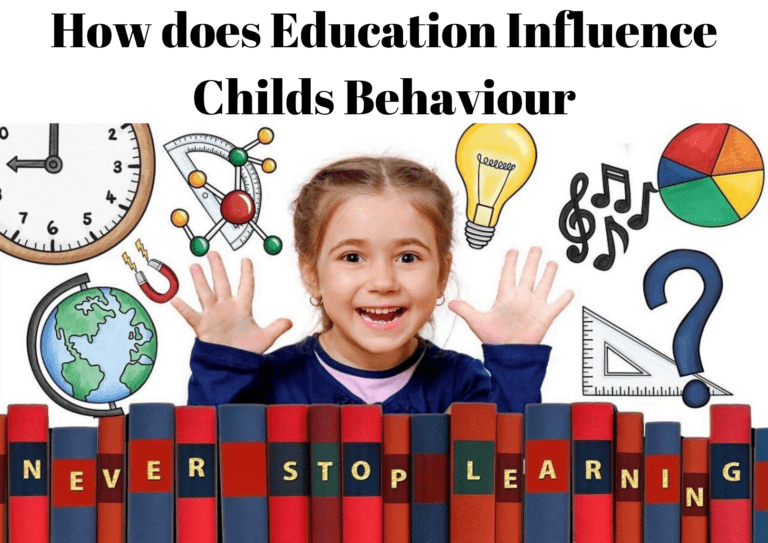
How a person behaves determines what they get out of their educational pursuit. A well-behaved child will always be focused and learn greatly while ill acts will lag behind. In research conducted by Center for Houston’s Future, the data reveal that the more education a person has, the less likely he or she is to engage in unhealthy behaviors. When the behavior is positive, it ensures desired results and on the other hand, when the behavior is negative, it brings about frustrations to all the stakeholders in the educational sector.
Reports of problematic behaviors are on the rise nationally, not only in the classroom but in society at large (Kowalski, 2003).Some of these immature, irritating, or thoughtless behaviors or “classroom incivilities” include: lateness or leaving early inappropriate cellphones or laptop usage in class, side conversations, wanton disregard for deadlines, grade grubbing, cheating and sniping remarks. These behaviors are not just instructors’ pet peeves; they have real costs including distracting other students and instructor in class, reducing student participation, lowering other students’ and instructor’s motivation in or out of class, affecting fairness in grading, using instructor or TA time unproductively and feeling disrespected as a fellow learner or authority figure (CMU, 2018).
In order to limit or deal effectively with these behaviors, it is important to understand the factors that cause or facilitate them. The two major causes are: contingent on individual student situations and the way in which the course is structured.
On the first possible cause, students can engage in problematic behaviors because of health problems, personal or family problems, adjustment or developmental issues (e.g., “immaturity” or self-esteem issues), or general academic difficulties. These factors are not controllable, but instructors who feel those are issues are at play can certainly refer students to the appropriate support services such as the academic development unit, counseling and psychological services, health services and office of the administrator of the school (CMU, 2018).
Furthermore, cultural or generational issues can also play a role. The culture of the Asian classroom is not homogenous, and expectations for classroom conduct can vary greatly, but they are all informed by the same basic academic values. Students from other cultures who don’t share the same values might not understand implicit expectations for classroom behaviors (CMU, 2018).
On the second possible cause, some of the uncivil behaviors can be inadvertently facilitated by the instructor’s behavior or the course structure. Boice (1998) researched classroom incivilities across a range of courses and reported several findings. He finds that instructors disagree with students about what counts as uncivil behavior, apart from a few egregious situations. Moreover, there is significant disagreement among different teachers, as there is among students. Another important finding he reports is that instructor’s age or teaching experience is not a significant determinant of incivilities. Young/novice instructors experience the same average level of incivilities as older/experienced instructors (CMU, 2018).
There are two major factors that predict classroom incivilities. First, is the choice of motivators.Instructors who use negative motivators (e.g., fear, guilt, embarrassment) experience more classroom incivilities than instructors who use positive motivators (e.g., encouragement, praise). The second is the number of “immediacy” behaviors (verbal and non-verbal signs of warmth and friendliness). Instructors exhibiting few immediacy behaviors experience significantly more incivilities compared to instructors who exhibit several of those behaviors. In other words, if students perceive the instructor has disengaged from the course and from their learning experience, they disengage in turn, exhibiting the attendant problematic behaviors. Other factors correlate negatively with incivilities, including perceived worth of teaching, clarity and organization, and pacing (CMU, 2018).
Some other times, students can be distressed. Whilst it is good for you to be empathetic, it is out of hands for you to become students’ counselor. What I am trying to state is that it isn’t your responsibility to offer therapy but to manage the situation to enable the rest of the class to get on with their learning. Refer students with emotional, psychological or financial issues to the appropriate quarters (Race & Pickford, 2007).
There are some other students whose behavior is to always boycott exercises and other responsibilities. In order to deal with such negative behavior, give students a choice with consequences attached. When students procrastinate or avoid tasks, give a directed choice/consequence. “If you choose not to do the work now, you will need to do it during free time” works especially well if free time normally involves activities such as board games, personal projects, or computer activities. The language of choice conveys the impression to students that their behavior is their responsibility and that they have some control over how they behave. In addition, provide take-up time. Take-up time refers to the time a teacher gives a student to respond to corrective discipline. After giving a direction or a reminder to a particular child, the teacher may conduct a relaxed eye-sweep of the entire group or turn away to attend to another student. In doing so, she conveys the expectation that the student will do what she has directed. This allows students to save face while they comply and permits teachers to avoid unnecessary, prolonged confrontations. When you’ve given a correction and the student has complied — however grudgingly — it is important to go back later in the lesson and reestablish your relationship. You can do this with a positive whisper (“Nice to see you hard at work . . .”) or even just a smile and an okay sign. It is reassuring to the child that, beyond the correction, his relationship with you is still okay; he is still accepted. A brief thanks or an acknowledgment says, “I noticed your effort” and conveys that no grudges are held (Rogers, 2018).
Another behavior that tells on education is when a student challenges the authority of a teacher. They also referred to as the debaters. You should consider recognizing their opinions, pulling out any valid point, and restating them before moving on. If you allow yourself to be drawn into an argument or be sidetracked, this would be to your own detriment and that of the whole class at large (Race & Pickford, 2007).
References
CMU (2018). Address Problematic Student Behavior. Retrieved from https://www.cmu.edu/teaching/designteach/teach/problemstudent.html
Race, P & Pickford, R (2007).Dealing with Disruptive Student Behavior. Retrieved from https://tomprof.stanford.edu/posting/1353
Rogers, B (2018). Five Trick Personalities—and How to Handle Them. Retrieved from http://teacher.scholastic.com/professional/classmgmt/trickypersons.htm