









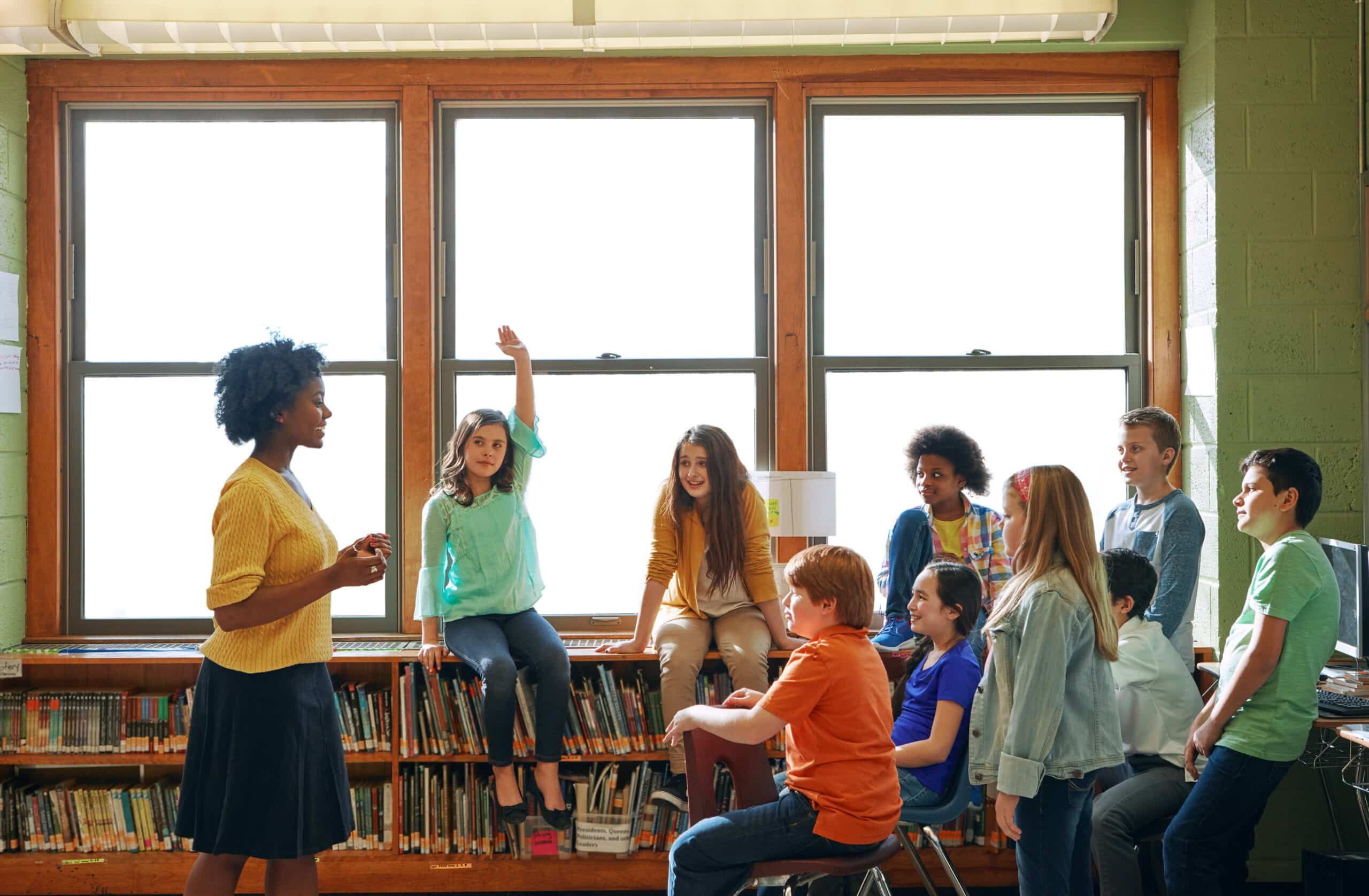
Duane Cloud notes that a child’s surroundings have an important impact on their well-being and development. That means that we cannot disassociate the performance of a child away from their environment. Every parent wants their children to have every possible advantage when growing up. From accelerated learning videos to other learning aids, there are a variety of products sold that claim to help in a child’s development. However, a very important part of this cannot be bought from any store. The physical environment surrounding the child has a great influence on his or her development.
The physical environment for children refers to the physical components of the area in which youngsters grow, work, and play. The physical environment can be virtually anything concrete that children may encounter in their lives. Though physical in nature, the environment can influence young people’s mental and emotional health as well as physical well-being. This is distinct from the emotional, cultural, or learning environments in which children find themselves (Cloud, 2018). So, no important stakeholder should neglect the place of physical environment and its effects while making decisions on students’ assimilation. The bare minimum for any child across the world is physical safety. In order for young children to lead a healthy and focused life, the environment in which they live in must be free of physical hazards.
Also emphasizing the importance of good learning environment, Linda Hutchinson (2018) explains that “Learning depends on several factors, but a crucial step is the engagement of the learner. This is affected by their motivation and perception of relevance. These, in turn, can be affected by learners’ previous experiences and preferred learning styles and by the context and environment in which the learning is taking place. In adult learning theories, teaching is as much about setting the context or climate for learning as it is about imparting knowledge or sharing expertise.”
Talking about students’ motivation to learning, this can come from two major sources—intrinsic (from the student) and extrinsic (from external factors). Individual learners’ intrinsic motivation can be affected by previous experiences, by their desire to achieve, and the relevance of the learning to their future. A teacher’s role in motivation should not be underestimated. Enthusiasm for the subject, interest in the students’ experiences, and clear direction (among other things) all help to keep students’ attention and improve assimilation of information and understanding. Even with good intrinsic motivation, external factors can demotivate and disillusion. Distractions, unhelpful attitudes of teachers, and physical discomfort will prompt learners to disengage. Maslow described a model to illustrate the building blocks of motivation. Each layer needs to be in place before the pinnacle of “self-actualization” is reached (Hutchinson, 2018).
An inclusive learning environment is accessible to all students, pleasant to work in, and appropriate for the teaching and learning methodologies used (TIC, 2018). In order to create an inclusive teaching environment, ensure all students can physically access your teaching and administrative spaces; ensure there is space to manoeuver around classes and offices with a wheelchair. Consider the width of the doorway; consider whether the current set up would mean a wheelchair user would be excluded from a class discussion because they are unable to sit with their peers. The classroom environment should also be kept tidy to reflect an inclusive system. To make this happen, make sure that you can hear, and be heard, clearly by all. Ask students for feedback; ensure suitable lighting. Can all your students see you and any teaching props you may use; position boards videos and screens where they can be viewed in comfort by all (TIC, 2018).
When we talk of physical convenience, people hardly talk of timetabling. You should ensure that timetabling gives all students sufficient time to move between teaching venues. Remember, some students, particularly those with certain disabilities or health problems, will take longer to travel between lectures than others (TIC, 2018).
Administrators should ensure that the physiological needs of both the teachers and students are met. Although the need to be fed, watered, and comfortable seems trite, many teachers will have experienced, for example, the difficulties of running sessions in cold or overheated rooms, in long sessions without refreshments, in noisy rooms, in facilities with uncomfortable seating. Physical factors can make it difficult for learners and teachers to relax and pay attention. Ensuring adequate breaks and being mindful of the physical environment are part of the teacher’s role (Hutchinson, 2018).
Safety is another point that is worth evaluating critically. A teacher should aim to provide an environment in which learners feel safe to experiment, voice their concerns, identify their lack of knowledge, and stretch their limits. Safety can be compromised, for example, through humiliation, harassment, and threat of forced disclosure of personal details. Teachers can create an atmosphere of respect by endorsing the learners’ level of knowledge and gaps in knowledge as essential triggers to learning rather than reasons for ridicule. Remembering names and involving the learners in setting ground rules are other examples of building mutual trust. Feedback on performance, a vital part of teaching, should be done constructively and with respect for the learner (Hutchinson, 2018).
As I draw the curtain of this essay to a close, always ensure that the lesson is relevant to the students. The relevance of learning is closely linked to motivation: relevance for immediate needs, for future work, of getting a certificate or degree regardless of content. Learning for learning’s sake is back in vogue in higher education after a move towards vocational or industrial preparation (Hutchinson, 2018).
May I shock you that teachers too are part of the physical structures that aid students’ assimilation. The teacher or facilitator is one of the most powerful variables in the educational environment. The teacher’s actions, attitudes (as evidenced by tone of voice, comments made), enthusiasm, and interest in the subject will affect learners indirectly. The capacity for subliminal messages is enormous. Inappropriate behavior or expression by a staff member will be noticed; at worst the learners will want to emulate that behavior, at best they will have been given tacit permission to do so. This explains why it is crucial for the teacher to always see themselves as a role model to the students (Hutchinson, 2018).
References
Hutchinson, L (2018). Educational Environment. Retrieved from https://www.ncbi.nlm.nih.gov/pmc/articles/PMC1125718/
TIC (2018).Physical Environment. Retrieved from https://www.tcd.ie/CAPSL/TIC/guidelines/environment/
Cloud, D (2018).Physical Environment for Children.Retrieved from https://study.com/academy/lesson/physical-environment-for-children-definition-characteristics-examples.html