








Most times when it comes to communication, especially in the educational sector, people tend to myopically conclude that emphasis should only be laid on verbal utterances. However, the non-verbal means of communication plays a major role than its verbal counterpart. Although subtle and not often pronounced, it serves as an embodiment of messages that reveal themselves even when the conveyer is not really paying attention. No wonder Peter Guber postulates that “Language is a more recent technology. Your body language, your eyes, your energy will come through to your audience before you even start speaking.”
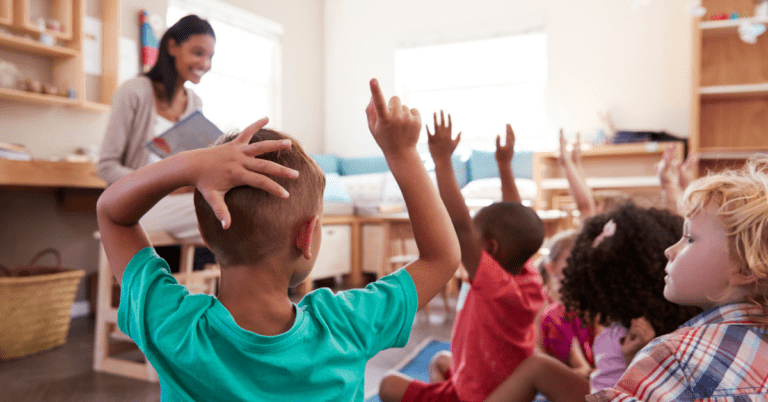
Nonverbal communication in the classroom can reduce unnecessary talk by the teacher; can increase the participation of the students and can increase effective school management. I see nonverbal communication as a neutral tool which can either be maximized or used for negative tendencies. What you make use of it depends on your effectiveness and understanding you have about it. The depth of your understanding of nonverbal communication reflects through how you are able to win the attention of your students with it or not. Having said, let me briefly run through some of the nonverbal behaviors that can be adopted in a classroom setting greater productivity.
Behavior charts: They are an easy way to encourage appropriate classroom behavior because students can see how they are faring in terms of behavior-wise. A simple tracking method is to use numbers or colors to signify good or poor choices. For the younger ones, it would be especially easy for them to learn to associate the color red or the number 1 with poor behavior and the number 5 and color green with good behavior. When your students are not complying with the rules, have them move their name or clip down the chart. This is a concrete nonverbal means of reinforcing the classroom rules (eHow, 2015).
Kinesics: This refers to gestures, postures and walking. The manner in which a teacher stands, walks around the class and utilizes gestures can convey authority to the students. Gestures can enhance what the teacher is saying. For example, if the teacher says stop, he or she can put up his hand, palm outward, in a gesture similar to the one a policeman uses to stop a car. The teacher can also nod his or her head while saying yes or shake his head from side to side while saying no. Travis Bradberry said: “The next time you need to win someone over to your way of thinking, try nodding your head as you speak. People unconsciously mirror the body language of those around them in order to better understand what other people are feeling.” I have always emphasized the fact that you cannot win the respect and admiration of your students through stern look or shouting at the top of your voice. You need to demonstrate authority instead of demanding for it.
Students who are interested in what is being taught and who are paying attention will tend to sit upright and lean towards the teacher. Students who are bored or disinterested in what is being taught will tend to slouch in their chairs. When a student crosses his or her arms, this could indicate defensiveness to what is being taught. When a student covers his or her mouth, it could indicate that he is lying. The hand on the mouth or touching one’s lips is an unconscious body language that stands for closing off of communication. In the same vein, if a teacher frequently crosses their arms, it will automatically put their students on the defensive side and make it look as if the teacher is closing themselves off to communication. If as a teacher, you don’t know what to do with your hands, try pressing your fingers against each other in front of your chest. Studies have shown that students are more likely to be receptive to your ideas if you have a body language that is open to them (eHow, 2015).
Facial expressions: It is said that facial expressions make about half of the nonverbal used in communications, making them a very important source of information. Examples include rolling the eyes, wrinkling the nose, sneering and raising one’s eyebrows. Teachers should use the relevant facial expressions to underscore or enhance what they are saying. They should smile when saying something positive and frown when showing displeasure. Teachers should also pay attention to the students’ facial expressions to gauge whether they are paying attention or understanding what is being taught. Culture does play a role in whether or not it is acceptable to show facial expressions. For example, the Japanese consider it inappropriate to show emotions via facial expressions while in public. You need to first understand the culture of the community in which you find yourself and more importantly, do not neglect the background of your students. Some of them might be of diverse background and if you communicate with them outside of their foundational knowledge, they are bound to misinterpret your intentions.
Non-verbal communication is highly reliable in the communication process, so if the recipient of a message is between two contradictory verbal and nonverbal messages, logic dictates that we push him toward the non-verbal message and ask him to pay more attention to non-verbal than verbal messages because non-verbal cues frequently reveal the intention of the sender of the information and reflect his/her emotional reactions (Bambaeeroo & Shokrpour, 2017). The scholars, through the result of their study also opine that attention to non-verbal communication skills can make a positive change in the future of a student’s life. It seems necessary for the teachers to practice and learn effective communication skills, especially for those who always interact with a large group of students. One of the factors contributing to the success or failure of students is the quality of the relationship and how the teacher builds this relationship with students. Finally, it is recommended that the teachers should improve their communication skills to have better communication with their audience (Bambaeeroo&Shokrpour, 2017).
References
Bambaeeroo&Shokrpour (2017).The Impacts of Teachers’ Nonverbal Communication on Success in Teaching. Retrieved from https://www.ncbi.nlm.nih.gov/pmc/articles/PMC5346168/
eHow (2015). Verbal and Nonverbal Communications in Classrooms. Retrieved from https://www.education.gov.gy/web/index.php/teachers/tips-for-teaching/item/1696-verbal-non-verbal-communications-in-the-classroom
Muchemwa, S 2013.Use of Nonverbal Communication in the Classroom as a Way of Enhancing Classroom Teaching. Retrieved from https://ac.els-cdn.com/S1877042813039025/1-s2.0-S1877042813039025-main.pdf?_tid=a5e3170f-eca8-4a29-ab6a-613de9b8e33f&acdnat=1543841748_0321775b86a2f4d1fa59989302be4255