



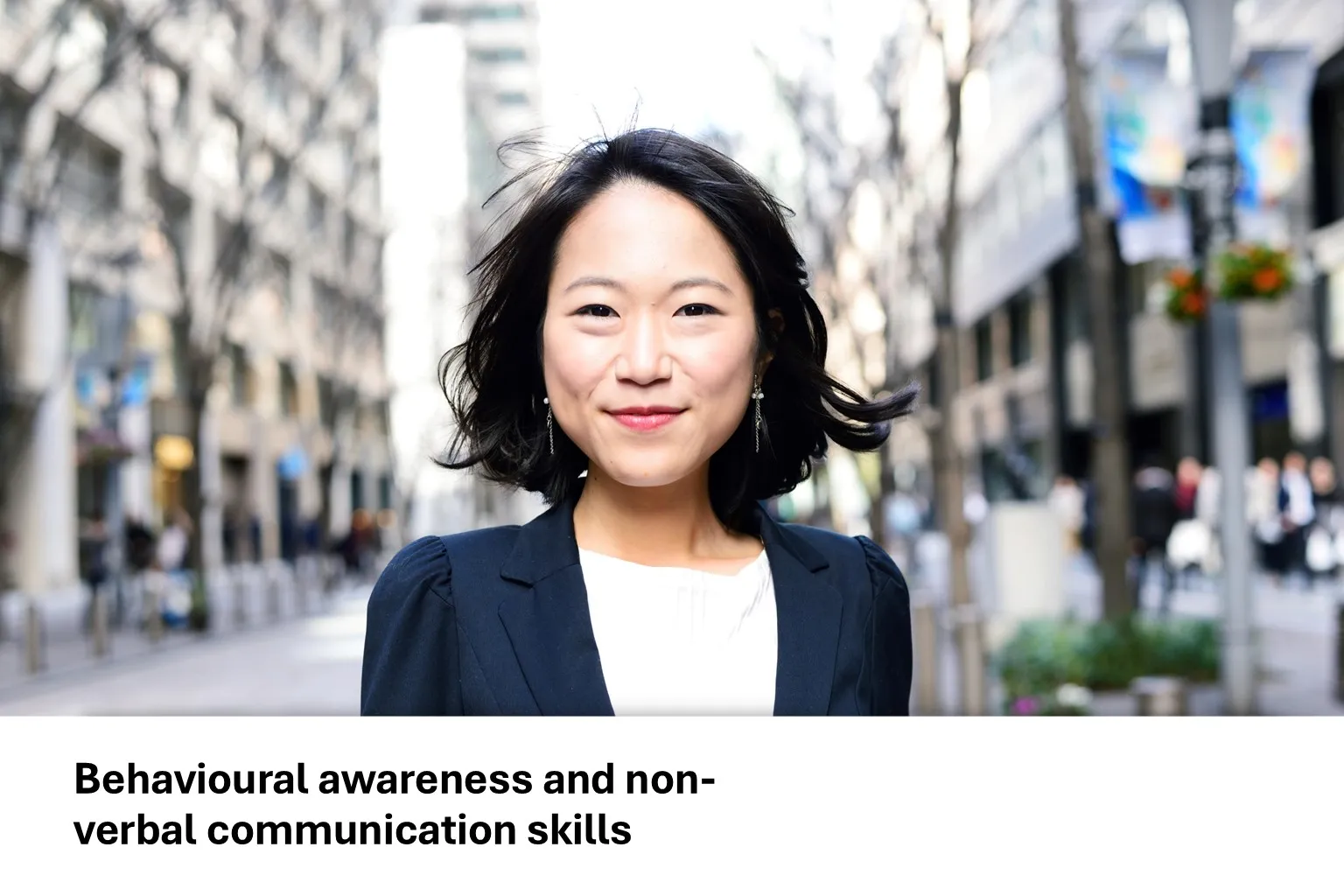
Behavioural Awareness and Non-Verbal Communication Skills for Professional Interaction
Understanding Behavioural Cues and Communication Signals
Behavioural awareness and non-verbal communication skills help employees understand people more accurately and communicate with greater confidence. In every workplace, people express thoughts, emotions, attitudes, and intentions through more than words. Facial expressions, posture, gestures, eye contact, tone of voice, personal space, and movement can influence how others interpret a message. When employees develop behavioural awareness, they can observe these signals more carefully and respond with better judgement.
Strong behavioural awareness helps employees recognise emotions, build rapport, reduce misunderstanding, and manage interactions professionally. It also supports better customer service, teamwork, leadership, conflict management, and workplace relationships. Employees who understand non-verbal communication can notice signs of discomfort, confidence, confusion, hesitation, agreement, or resistance during conversations. Useful insights on communication and behaviour can come from Harvard Business Review and Psychology Today.
Applying Non-Verbal Communication in Workplace Situations
Non-verbal communication plays an important role in daily workplace interactions. Employees may use body language to show attention, respect, confidence, openness, or professionalism. A calm posture, steady tone, appropriate eye contact, and active listening behaviour can strengthen trust. Poor non-verbal signals, such as crossed arms, distracted eye movement, tense facial expressions, or careless posture, can create negative impressions even when the spoken message sounds correct.
This course helps participants develop practical behavioural awareness and non-verbal communication skills. Participants will learn how to observe body language, interpret behavioural cues, manage their own non-verbal signals, and improve professional interactions. They will also explore how culture, context, emotions, stress, and personal habits influence behaviour.
The course encourages participants to avoid quick assumptions. Behavioural cues need careful interpretation because one signal alone may not reveal a person’s true meaning. Participants will learn how to look for patterns, compare verbal and non-verbal messages, ask clarifying questions, and respond with professionalism.
By developing behavioural awareness and non-verbal communication skills, employees can improve workplace communication, strengthen relationships, and manage conversations more effectively. These skills help participants build trust, understand others better, and present themselves with greater confidence. They also support leaders, customer-facing staff, trainers, supervisors, and team members who need to read situations accurately and communicate with clarity, respect, and emotional intelligence.

Reviews
There are no reviews yet.