



Building Emotional Intelligence at Work
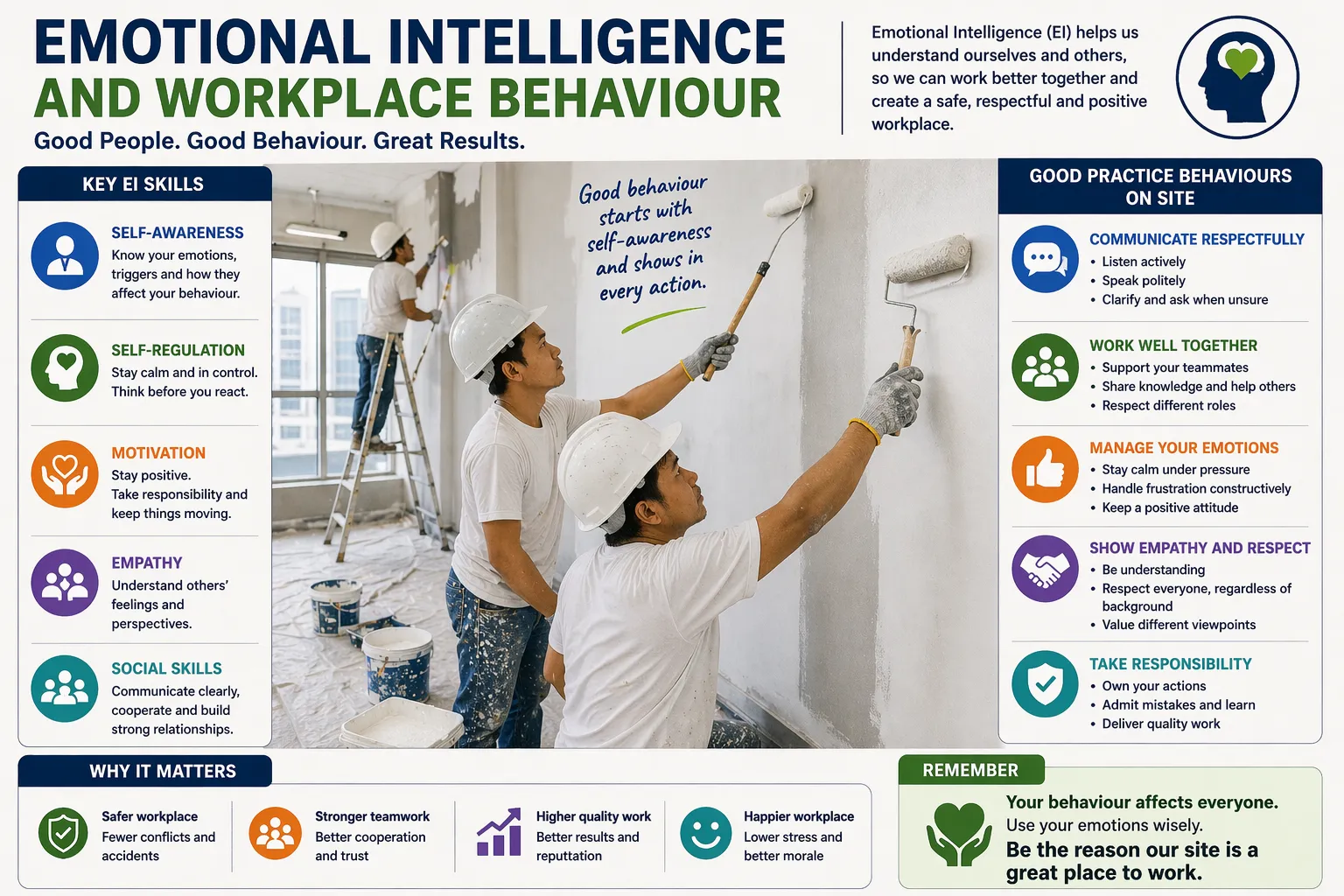
Emotional Intelligence and Workplace Behaviour are essential for creating respectful, productive, and professional work environments. In every organisation, employees interact with different personalities, expectations, emotions, and communication styles. Therefore, they need the ability to understand themselves and respond well to others. Emotional intelligence helps individuals recognise their feelings, manage reactions, and communicate with maturity. As a result, employees can build stronger relationships, reduce conflict, and perform with greater confidence.
Understanding Self-Awareness and Self-Control
Self-awareness is the foundation of emotional intelligence. It helps employees understand their emotions, triggers, strengths, and behaviour patterns. In addition, it allows them to recognise how their tone, body language, and responses affect others. When employees are self-aware, they can pause before reacting. Moreover, they can choose a more professional response during stress, disagreement, or pressure. Guidance from MindTools highlights the importance of emotional intelligence, self-awareness, and relationship management in workplace success.
Improving Workplace Behaviour
Workplace behaviour reflects attitude, discipline, respect, responsibility, and emotional control. Employees who manage emotions well are more likely to listen actively, speak respectfully, and handle challenges calmly. However, poor emotional control can lead to misunderstanding, tension, blame, and unprofessional conduct. Therefore, learners need practical strategies to manage frustration, accept feedback, and respond constructively. As a result, workplace interactions become more positive and productive.
Strengthening Empathy and Communication
Empathy helps individuals understand the feelings, needs, and perspectives of others. It does not mean agreeing with everything. Instead, it helps employees respond with care, fairness, and respect. Furthermore, empathy improves communication because people become more attentive to emotional signals and social cues. The Harvard Business Review provides useful insights on leadership, communication, emotional intelligence, and workplace relationships. Therefore, learners can use these ideas to improve teamwork and professional interaction.
Supporting Teamwork and Conflict Management
Emotional intelligence supports stronger teamwork because it helps people manage differences constructively. In addition, it helps employees remain calm during conflict and focus on solutions. When individuals understand emotions, they can reduce defensiveness and improve cooperation. Consequently, teams can communicate better, solve problems faster, and build stronger trust. This creates a healthier workplace culture and improves overall performance.
Course Focus and Learning Value
This course helps learners strengthen self-awareness, self-control, empathy, communication, conflict management, and professional behaviour. Learners will explore how emotions influence decisions, reactions, teamwork, and workplace relationships. Moreover, they will learn how to manage difficult situations with confidence and maturity. Ultimately, this course prepares learners to behave professionally, communicate respectfully, and contribute positively to workplace success.

Reviews
There are no reviews yet.