



1. Introduction to the Model
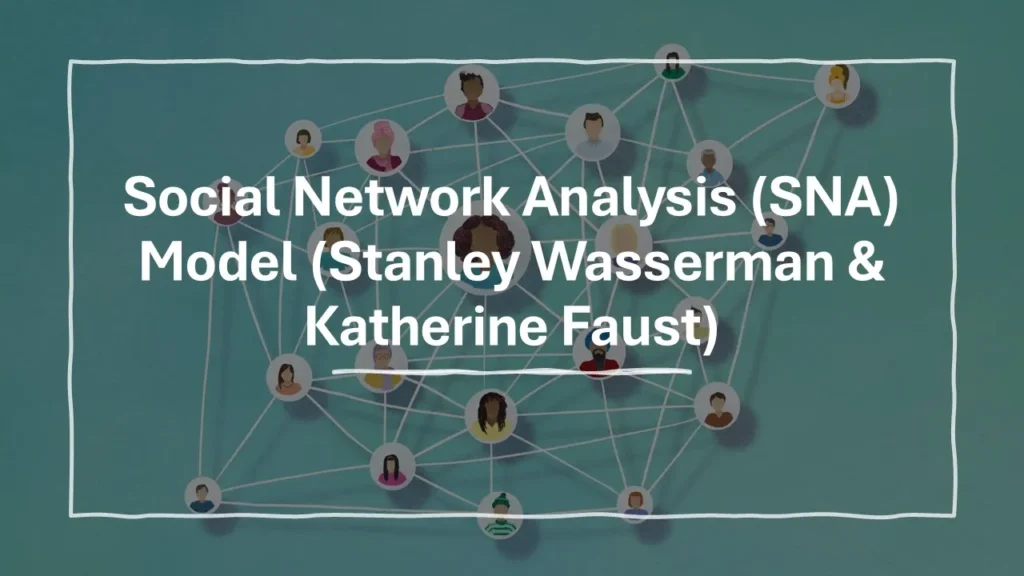
The Social Network Analysis (SNA) Model focuses on examining relationships, interactions, and structures within networks of individuals or groups. For investigators, this model provides a powerful way to understand how people are connected and how information, influence, and resources flow within a network.
For trainees, the key learning principle is that criminal activity often occurs through collaboration rather than isolation. Individuals operate within networks where roles, influence, and connections determine how activities are carried out. Understanding these relationships allows investigators to move beyond surface-level suspects and uncover hidden actors, facilitators, and decision-makers.
The model supports structured investigative thinking by enabling officers to map and analyze connections, communication patterns, and group structures. It highlights the importance of identifying key influencers, central figures, and bridging individuals who connect different parts of a network.
In modern investigations, SNA is widely used in organized crime, terrorism, financial fraud, and cybercrime cases. It supports intelligence-led operations by providing insights into network dynamics and operational structures.
Ultimately, the SNA model enhances investigative effectiveness by revealing how networks function, enabling targeted interventions that disrupt entire criminal systems rather than isolated individuals.
2. Background of the Model
The Social Network Analysis Model is strongly influenced by the work of Stanley Wasserman and Katherine Faust, who formalized the theory and methodology of network analysis in their influential research. Their contributions helped establish SNA as a structured and scientific approach to studying relationships within networks.
The model originates from the fields of Sociology and Statistics, where researchers sought to understand how individuals are connected and how these connections influence behavior. Over time, these concepts were applied to criminology to analyze criminal organizations and collaborative networks.
SNA is based on the concept of Social Network Analysis, which uses mathematical and graphical methods to represent relationships between actors. It focuses on nodes (individuals) and ties (relationships), providing a structured way to study network structures and dynamics.
With the advancement of digital communication, SNA became increasingly relevant in investigative work. Law enforcement agencies began using it to analyze phone records, social media interactions, financial transactions, and communication networks.
Today, the SNA model is widely used in intelligence and law enforcement operations. It is particularly valuable in understanding complex, multi-actor systems, making it a critical tool in modern investigations involving organized and collaborative criminal activities.
3. What is the Model
The Social Network Analysis (SNA) Model is an investigative approach that examines social relationships and connections between individuals or groups. It focuses on identifying how actors are linked and how influence and information flow within a network.
The model uses analytical techniques to map nodes (individuals) and ties (relationships), revealing structures such as clusters, hierarchies, and central figures.
For investigators, it provides a structured framework to identify key actors, influencers, and hidden connections, enabling a deeper understanding of criminal networks and supporting effective intervention strategies.
4. Components / Stages of the Model
Nodes (Actors in the Network)
Nodes represent individuals, groups, or entities within the network. These can include suspects, facilitators, or organizations. Investigators analyze nodes to understand who is involved and their position within the network. Some nodes may appear insignificant but play crucial roles in maintaining network operations.
Ties (Relationships and Interactions)
Ties represent the connections between nodes, such as communication, financial transactions, or physical interactions. Investigators study these relationships to determine how individuals are linked and how they collaborate. Strong or frequent ties may indicate close cooperation.
Centrality (Influence and Importance)
Centrality measures the importance of a node within the network. Individuals with high centrality often act as leaders, coordinators, or influencers. Investigators prioritize these actors because disrupting them can significantly weaken the network.
Clusters and Subgroups
Clusters are groups of nodes that are closely connected. These may represent teams or operational units within a larger network. Understanding clusters helps investigators identify how tasks are organized and distributed.
Bridging Nodes (Connectors)
Bridging nodes connect different clusters or subgroups. These individuals play a critical role in linking separate parts of the network, and their removal can isolate groups and disrupt operations.
5. How the Model Works in Investigation
Step 1: Data Collection and Network Mapping
Investigators gather data from communication records, financial transactions, surveillance, and intelligence reports. This data is used to construct a visual and analytical map of the network.
Step 2: Identification of Key Actors
Using SNA tools, investigators identify individuals with high centrality or influence. These actors often play critical roles in decision-making and coordination.
Step 3: Analysis of Relationships and Patterns
Investigators examine how nodes are connected and how frequently they interact. This reveals network structure, communication flow, and operational dynamics.
Step 4: Detection of Hidden or Indirect Links
The model helps uncover indirect relationships that may not be immediately visible. This is essential for identifying covert participants and intermediaries.
Step 5: Strategic Intervention
Based on the analysis, investigators target key nodes or connections to disrupt the network. This ensures that enforcement actions have maximum impact on the overall system.
6. Case Study / Practical Example
A law enforcement agency investigated a drug trafficking network operating across multiple regions. Initial arrests identified several individuals, but the full structure of the network remained unclear.
Mapping Phase
Investigators collected phone records and communication data. Using SNA tools, they mapped relationships between suspects, revealing a complex network of interactions.
Analysis Phase
The analysis identified a central figure coordinating operations, along with multiple subgroups responsible for distribution and logistics. Several individuals acted as bridging nodes connecting different regions.
Intervention Phase
Authorities targeted the central figure and key connectors through coordinated operations. This disrupted communication and coordination within the network.
Outcome
The network collapsed as critical connections were removed. Multiple arrests were made, and the flow of illegal goods was significantly reduced.
This case demonstrates how SNA enables investigators to understand and dismantle complex networks, rather than focusing on isolated offenders.
7. Application of the Model (Where & When to Use)
Organized Crime Investigations
The model is highly effective in cases involving syndicates, gangs, and trafficking networks. Investigators use SNA to understand hierarchies, roles, and communication structures, enabling targeted disruption of criminal organizations.
Terrorism and Intelligence Operations
SNA is widely used in counter-terrorism to identify cells, facilitators, and support networks. Understanding these connections is critical for preventing coordinated attacks and dismantling operational structures.
Financial and Fraud Investigations
In financial crimes, SNA helps trace relationships between individuals and entities involved in fraudulent activities. It reveals hidden connections and collaborative schemes, strengthening investigative findings.
Cybercrime and Digital Investigations
The model is particularly useful in analyzing online interactions and digital communication networks. Investigators can identify key actors and collaboration patterns in cybercrime operations.
Situations Requiring Network Insight
SNA is best applied in complex cases involving multiple actors. In simple, single-offender cases, its use may be limited and unnecessary.
8. Strengths of the Model
Reveals Hidden Relationships
One of the strongest advantages of SNA is its ability to uncover hidden connections and indirect relationships. This allows investigators to see the full network structure rather than isolated individuals.
Identifies Key Influencers and Leaders
The model helps pinpoint individuals with the greatest influence or control. Targeting these actors can significantly disrupt criminal operations.
Supports Data-Driven Investigations
SNA relies on measurable data and analytical tools, ensuring that findings are objective and evidence-based. This enhances the credibility of investigations.
Effective for Complex Cases
The model is highly suitable for investigations involving multiple actors and interactions, providing clarity in complex and large-scale operations.
Enhances Strategic Decision-Making
By understanding network dynamics, investigators can make informed decisions about where to focus resources for maximum impact.
9. Limitations of the Model
Dependence on Data Quality
The effectiveness of SNA depends on the availability and accuracy of data. Incomplete or inaccurate data can lead to misleading network representations.
Complexity of Analysis
The model requires specialized tools and expertise. Without proper training, investigators may find it difficult to interpret network structures and metrics.
Time-Intensive Process
Building and analyzing networks can take significant time, especially in large investigations involving extensive data.
Risk of Misinterpretation
Incorrect assumptions about relationships may lead to wrong conclusions or targeting of individuals.
Limited Use in Simple Cases
For straightforward investigations involving a single suspect, the model may be unnecessary and inefficient.
10. Summary of Key Points
The Social Network Analysis Model examines relationships, structures, and interactions within networks to identify key actors and connections. Influenced by Stanley Wasserman and Katherine Faust, it provides a structured approach to understanding complex social and criminal networks.
For investigators, the model enables mapping of relationships, identification of influencers, and disruption of network operations. It is particularly valuable in organized crime, terrorism, and collaborative criminal activities.
While it requires data and expertise, its ability to reveal hidden structures and support strategic intervention makes it a powerful tool in modern investigative and intelligence operations.